
Kentia palm
Howea forsteriana
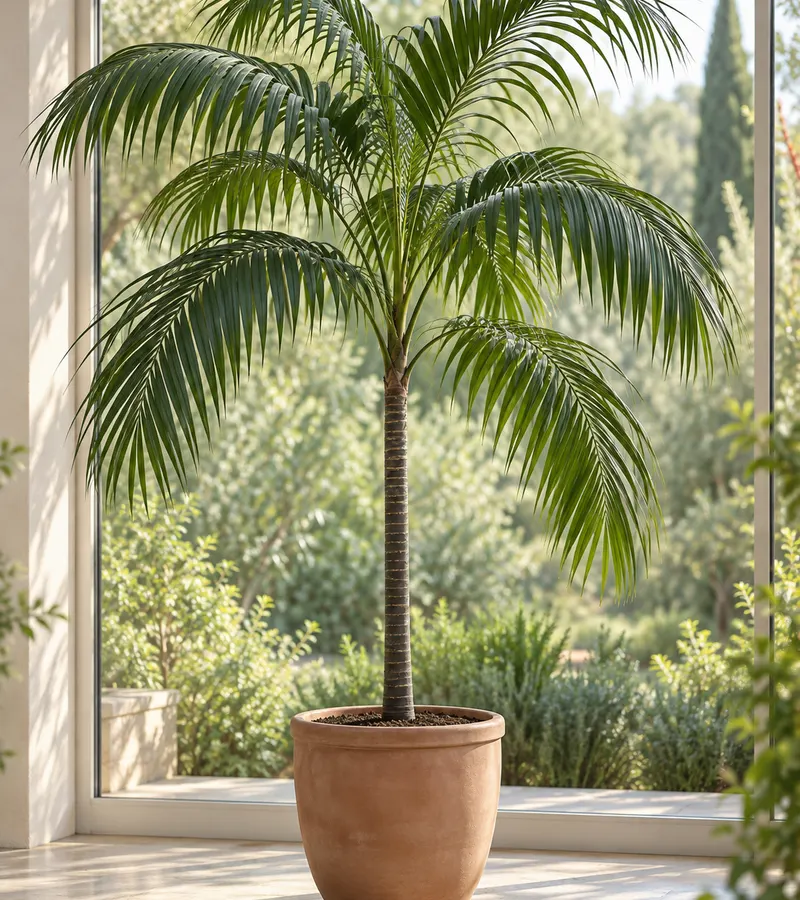
Gracefully arching fronds for a lobby or living room.
Care and placement
Tolerates low light but looks best in bright indirect light; let the top 2–3 cm dry before watering; roots are sensitive so repot rarely; use filtered or rain water.
Draft mature dimensions
Maximum height (cm): 250 cm · Maximum spread (cm): 150 cm
Things to consider
ASPCA lists kentia palm (Howea forsteriana) as non-toxic to dogs, cats and horses. Still discourage pets from chewing fronds.
How to grow and care for it
Planting and pot
Use a deep, well-draining pot. Roots dislike disturbance, so repot only when very root-bound (at most every 3–4 years) and go up one size only.
Light
Best in bright indirect light; low light is tolerated but new fronds emerge very slowly. Direct sun burns leaves; filter south light through a sheer curtain.
Watering
Let the top 2–3 cm dry then water, with free drainage; less in autumn and winter. Waterlogging is the most common cause of death indoors. Humidity below 40% burns tips. Sensitive to fluoride and boron and salt-intolerant, so flush the mix every couple of months.
Feeding
Balanced palm fertilizer at half strength monthly (or every 2–3 months) in spring and summer, or a slow-release around 3-1-2; none when cool.
Pruning
Only cut fully dry fronds at the base.
Propagation
Mostly grown from seed (slow, difficult at home); it rarely divides. Buying a young plant is more practical than propagating.
Pests and common problems
Spider mites in dry winter air, mealybugs, scale and thrips: raise humidity, wash fronds, use insecticidal soap or neem oil. Diseases: root rot from overwatering and pink rot in waterlogged crowns.
For plentiful, healthy leaves
For healthy new fronds: bright indirect light, clean water, light steady feeding in warm months, minimal root disturbance and humidity above 40%. It grows very slowly.