
Chinese hibiscus
Hibiscus rosa-sinensis
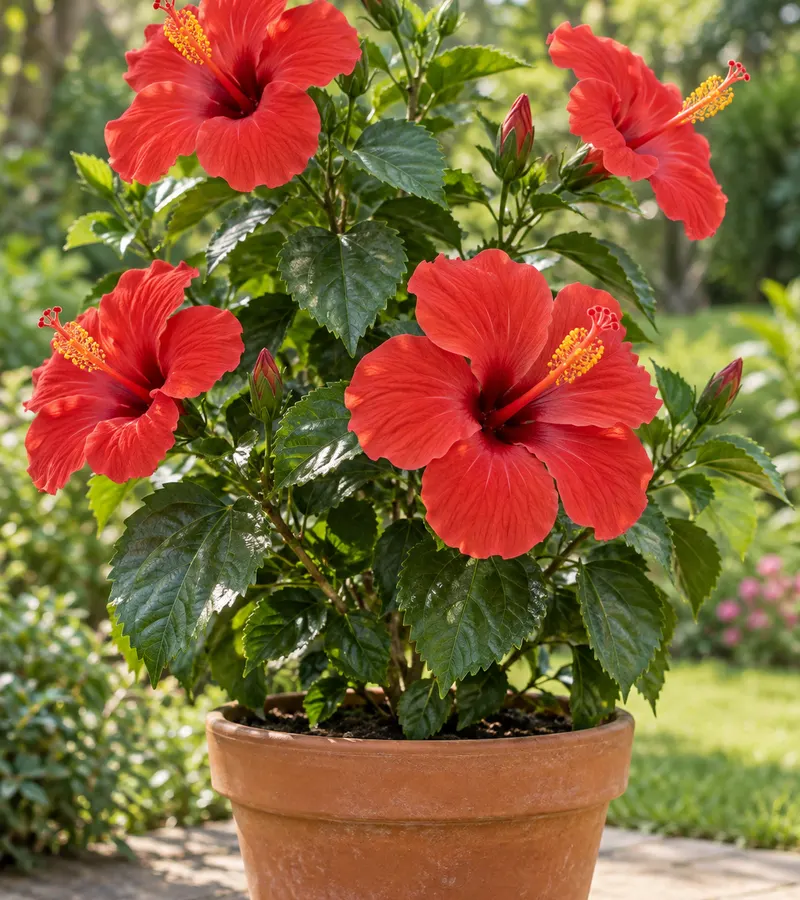
Large flowers and deep foliage inspire a tropical garden.
Care and placement
Needs full sun (about 6+ hours), steady watering when the top 2–3 cm is dry and loose well-drained soil; thrives in heat but sudden changes cause bud drop.
Draft mature dimensions
Maximum height (cm): 300 cm · Maximum spread (cm): 250 cm
Things to consider
ASPCA lists Hibiscus species (e.g. H. syriacus) as non-toxic to dogs, cats and horses. Still discourage pets from chewing large amounts of leaves or flowers.
How to grow and care for it
Planting and pot
Plant in a large pot or in the ground in sun, with loose, humus-rich, well-drained soil; pots need drainage holes. Move into hot sun gradually over 8–10 days to avoid leaf scorch.
Light
At least about 6 hours of direct sun daily; light shade at the hottest part of summer is fine. Too little sun means few flowers.
Watering
Water when the top 2–3 cm is dry, typically every 2–3 days in hot weather and every 5–7 days when cool; keep evenly moist but never waterlogged. Bud drop usually comes from erratic watering, sudden temperature change or dry air.
Feeding
Prefers low-phosphorus, high-potassium feed (e.g. 9-3-13, 10-4-12) every 2–6 weeks in the growing season. Avoid too much nitrogen (leaves, few flowers) and high-phosphorus bloom boosters, which one source says suppress flowering.
Pruning
Prune in late winter or early spring before growth; flowers form on new wood so pruning to stimulate new stems gives more blooms. Remove spent flowers promptly.
Propagation
Semi-hardwood cuttings: take a healthy stem, strip lower leaves, set in moist mix in bright indirect light; roots form in a few weeks. Air layering and grafting also work.
Pests and common problems
Aphids (on new growth and buds), whiteflies, spider mites and mealybugs. Blast undersides of leaves with water or use insecticidal soap or neem oil, which are gentle enough for flowering plants.
For more flowers
For more blooms: enough sun, consistent watering, high-potassium low-nitrogen low-phosphorus feeding, pruning for new wood and deadheading. Bring it somewhere warm when nights fall below about 10 °C (50 °F).