
Peacock plant
Goeppertia makoyana
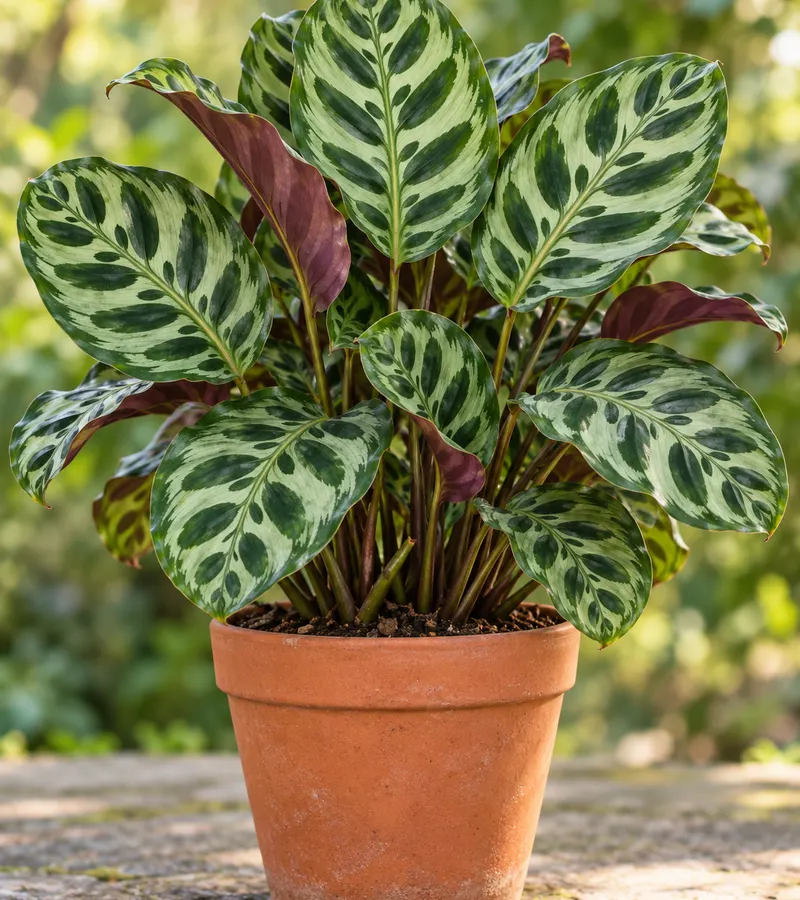
Peacock-feather leaf patterns that fold at night and prefer humidity.
Care and placement
Prefers bright indirect light (north or east window), humidity from 60% and 15–24 °C; water evenly with filtered or rain water since it is sensitive to fluoride.
Draft mature dimensions
Maximum height (cm): 60 cm · Maximum spread (cm): 50 cm
Things to consider
ASPCA lists Calathea species (family Marantaceae) as non-toxic to dogs, cats and horses. Still discourage pets from chewing large amounts.
How to grow and care for it
Planting and pot
Use a loose mix: peat with potting soil plus perlite or pumice for drainage. Repot every 2 years in spring.
Light
Bright indirect light; direct sun burns leaves. A north or east window often suits it.
Watering
Water thoroughly until it drains, then let only the top 1–2 cm dry. Use filtered, rain or distilled water at room temperature. Keep humidity at 60% or more (a humidifier beats pebble trays); below 50% leaf edges brown and crisp within days.
Feeding
A light feeder: balanced fertilizer at 1/4–1/2 strength every 4–6 weeks from spring to autumn; stop when cool. Excess crisps tips and builds salts.
Pruning
Only cut yellowed or damaged leaves off at the base.
Propagation
Divide in spring at repotting: split into clumps each with several leaves and healthy roots; keep warm, humid and in bright indirect light. Expect a 2–3 month sulk before regrowth.
Pests and common problems
Spider mites (fine webs, speckled yellow leaves): raise humidity, rinse with a strong spray, use insecticidal soap or neem if severe. Constantly damp peat mixes attract fungus gnats. Brown edges come from low humidity or fluoride.
For plentiful, healthy leaves
For lush, well-patterned leaves: high humidity, clean water, steady bright indirect light, 15–24 °C and no drafts; feed very lightly. Indoors it almost never flowers.