
Gerbera daisy
Gerbera jamesonii
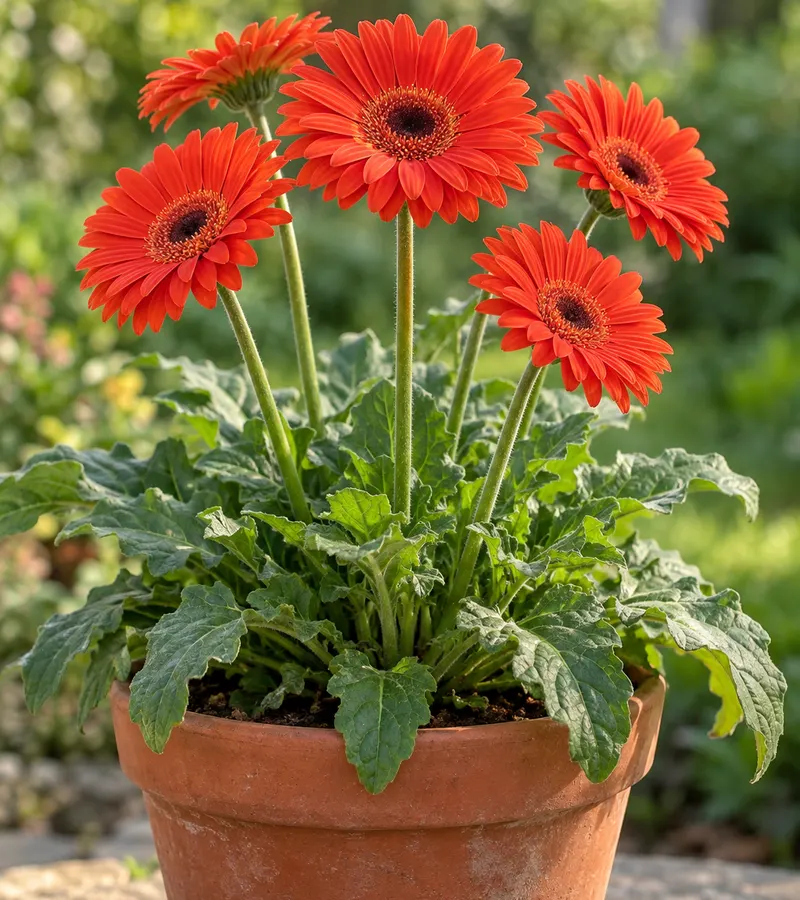
Long-petalled daisies on straight stalks, nice in sunny balcony pots.
Care and placement
Needs 6–8 hours of morning or late sun, avoiding hot midday sun; water at the base and keep the crown dry and slightly above soil to avoid rot; feed plenty of potassium.
Draft mature dimensions
Maximum height (cm): 40 cm · Maximum spread (cm): 30 cm
Things to consider
ASPCA lists Gerbera jamesonii (Barberton daisy) as non-toxic to dogs, cats and horses. Still discourage pets from chewing large amounts.
How to grow and care for it
Planting and pot
Plant with the crown slightly above the soil line; burying it invites crown rot. Use a loose, well-draining mix and keep mulch a few cm away from the crown. Pots need drainage holes; repot or divide every 2–3 years.
Light
At least 6 hours of sun daily, preferably morning or late-afternoon; avoid hot midday sun, which scorches leaves.
Watering
Water at the base in the morning, keep the crown dry and let the soil dry slightly between waterings; a wet crown promotes powdery mildew and crown rot.
Feeding
Water-soluble fertilizer with micronutrients every 2–4 weeks in spring and summer; a high-potassium feed (e.g. tomato feed) encourages repeat flowering; pale leaves mean it needs feeding.
Pruning
Twist spent flower stems off at the base rather than cutting them (leftover stubs rot and carry grey mould into the crown); remove wilted or diseased leaves.
Propagation
Divide in early spring as new growth appears: water well the night before, give each piece healthy roots and at least one crown, replant immediately and remove half the lower leaves. Seed and basal cuttings also work.
Pests and common problems
Aphids, spider mites and thrips (also whiteflies, scale): insecticidal soap or neem oil. Powdery mildew, grey mould, anthracnose and crown rot in humid, stagnant air — give spacing and remove diseased leaves.
For more flowers
For many blooms: enough morning sun, a high dry crown, plenty of potassium, twisting off spent stems, dividing when crowded and preventing fungus with airflow.