
Frangipani
Plumeria rubra
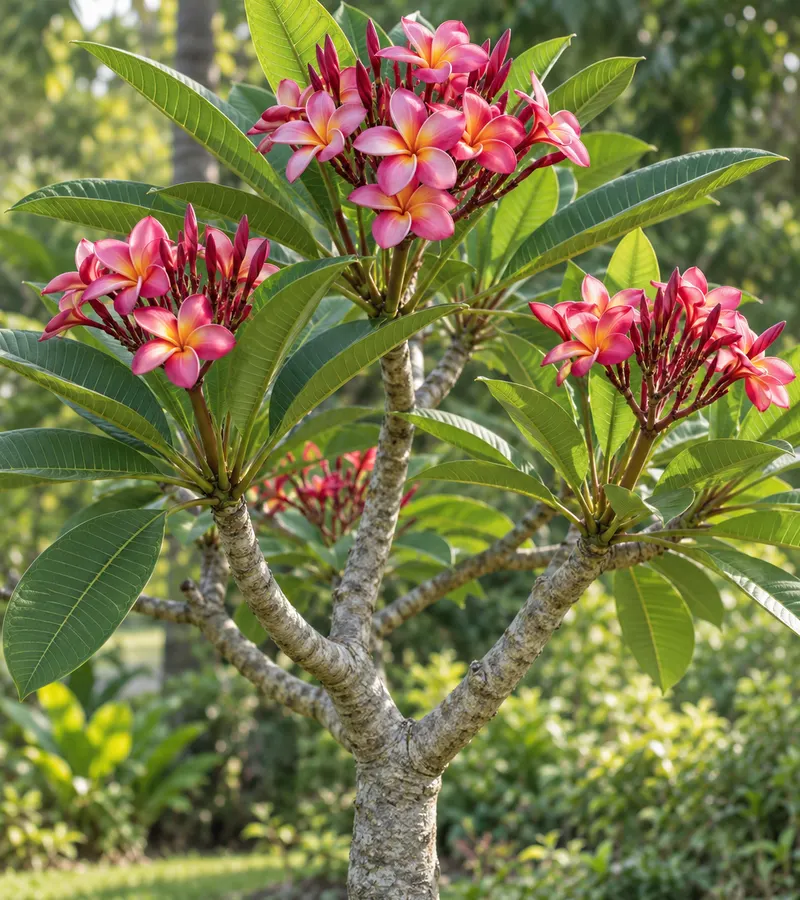
Sculptural branches and soft flowers invite outdoor planting research.
Care and placement
Needs full sun (6+ hours), very free-draining soil and soak-and-dry watering; goes dormant and drops leaves when cool; protect from frost below about 4 °C (40 °F).
Draft mature dimensions
Maximum height (cm): 600 cm · Maximum spread (cm): 500 cm
Things to consider
The white latex that oozes from broken branches can irritate skin and mucous membranes and is toxic if eaten in quantity (Wikipedia, Plumeria). Wash hands after handling; keep from children and pets.
How to grow and care for it
Planting and pot
Plant in full sun in very fast-draining soil (sandy loam with perlite or pumice), avoiding wet spots; pots need drainage holes. Shelter from strong wind if possible.
Light
Full sun, 6 or more hours; insufficient light is the most common reason it does not bloom.
Watering
Water deeply then let the soil dry; drought-tolerant, and overwatering causes most problems. Do not water outdoor plants in winter dormancy; indoor dormant plants need only occasional water.
Feeding
Use a high-phosphorus bloom fertilizer (e.g. 10-30-10) monthly from early spring through August (or every 2–4 weeks); too much nitrogen gives leaves over flowers; some sources start balanced then switch to high phosphorus.
Pruning
Little pruning needed: trim damaged or diseased branches or shape. Timing varies (late winter); heavy pruning, especially in winter, can reduce next year's blooms.
Propagation
Take 30–45 cm tip cuttings from branches with mature grey bark, let them dry and callus for about a week in a cool shady spot, dip in rooting hormone and plant in free-draining mix; do it in spring or early summer.
Pests and common problems
Root rot is the most serious disease, and plumeria rust can occur. Pests include aphids, caterpillars, mealybugs, scale, spider mites, thrips and whiteflies; they rarely kill an established plant.
For more flowers
For abundant fragrant flowers: full sun, free-draining soil, sparing water, monthly high-phosphorus feeding and minimal heavy pruning. Flowers open in clusters at branch tips in the warm season.