
Chinese banyan
Ficus microcarpa
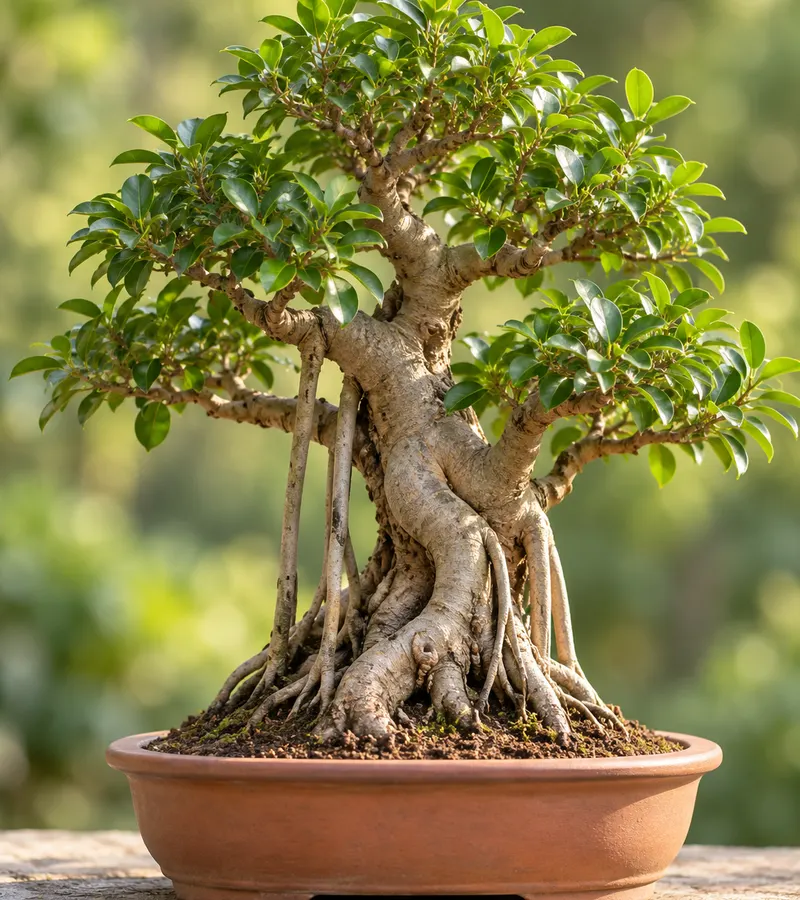
Aerial roots and a gnarled trunk make it a classic bonsai subject.
Care and placement
Prefers bright indirect light (bonsai forms need strong light), water when the top 2–3 cm is dry with good drainage; 15–25 °C; dislikes being moved.
Draft mature dimensions
Maximum height (cm): 500 cm · Maximum spread (cm): 400 cm
Things to consider
Ficus latex contains ficin and psoralen: it irritates the gut and skin and ASPCA lists the genus as toxic to dogs, cats and horses. Wear gloves when pruning; keep from children and pets.
How to grow and care for it
Planting and pot
Plant in a well-draining pot or bonsai tray with a loose, free-draining mix. Repot every 2–3 years in early spring with fresh mix.
Light
Bright indirect light; indoor and bonsai forms need strong light near a sunny window. Harsh direct sun scorches leaves.
Watering
Water when the top 2–3 cm is dry with good drainage. Soft yellow falling leaves mean overwatering or poor drainage; brittle falling leaves mean underwatering or too much wind.
Feeding
Balanced water-soluble fertilizer monthly (some sources every 2–4 weeks) in spring and summer, less in autumn and winter.
Pruning
Prune in spring or early summer: either continuously (remove 4–6 leaves for every 10 new) or heavily by season (cut branches back by a third to half). Shoots sprout from the trunk, so pruning mistakes are forgiving. Wear gloves.
Propagation
Stem cuttings or air layering; roots quickly in warm conditions. Take cuttings in spring and root them in water or clean mix.
Pests and common problems
Scale, thrips and spider mites; also mealybugs, aphids and psyllids that curl leaves. Treat consistently with neem oil or insecticidal soap; poor airflow indoors makes outbreaks worse.
For plentiful, healthy leaves
For a dense canopy and attractive aerial roots (bonsai): bright light, even watering, regular feeding in warm months and seasonal pruning; aerial roots grow from branches toward the soil giving an aged look. Outdoors it bears small figs.