
Fiddle-leaf fig
Ficus lyrata
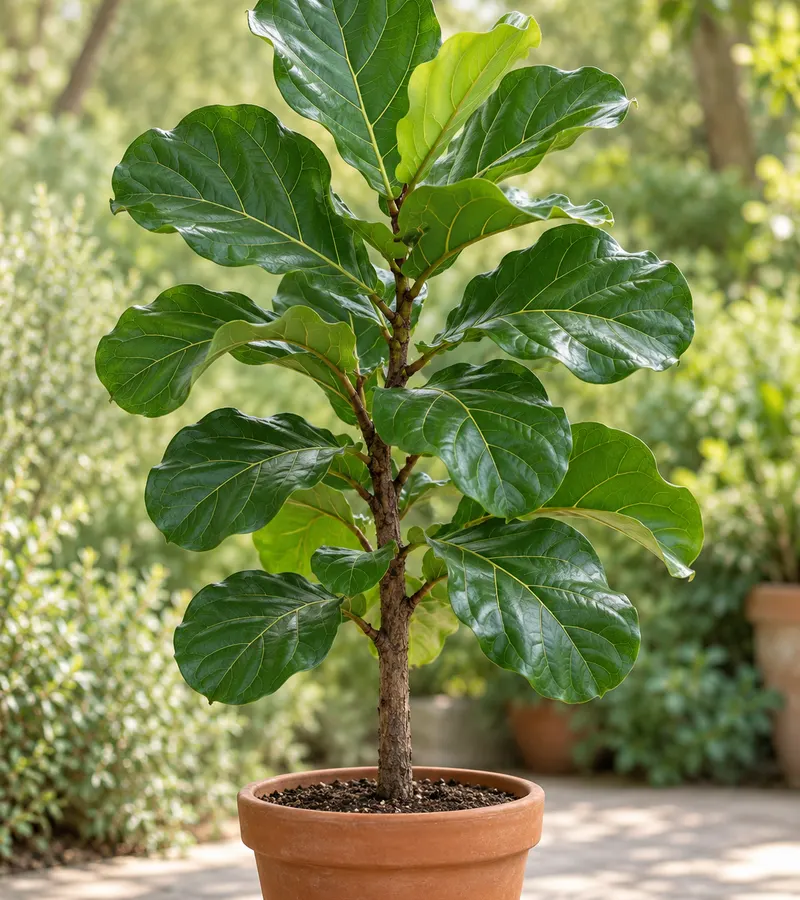
Large violin-shaped leaves, a stately but somewhat fussy houseplant.
Care and placement
Prefers bright indirect light (near an east window) and dislikes being moved; water when the top 5 cm is dry; sensitive to change, so it drops leaves easily.
Draft mature dimensions
Maximum height (cm): 250 cm · Maximum spread (cm): 120 cm
Things to consider
Ficus latex contains ficin and psoralen: it irritates the gut and skin and is toxic to dogs and cats (ASPCA). Wear gloves when pruning; keep pets and children from chewing leaves.
How to grow and care for it
Planting and pot
Plant in a well-draining pot with a loose mix. Repot every 2–3 years in early spring into a pot only 5–7 cm wider.
Light
Bright indirect light, near an east window or gradually acclimated to south-window sun. Low light yellows and drops leaves.
Watering
Water when the top 5 cm is dry, less in cool months. Overwatering yellows lower leaves evenly then rots roots; drought makes leaves droop then crisp from the tip. Flush salts from the pot about monthly.
Feeding
Balanced liquid fertilizer at half strength monthly from March to September; none from October to February.
Pruning
To encourage branching, cut the main stem just above a leaf node in spring or early summer. Cuts bleed white latex — wear gloves; it is a mild irritant.
Propagation
Take 15–20 cm stem cuttings with 2–3 leaves in spring, remove the lowest leaf, dip in rooting hormone and root in a 1:1 perlite and compost mix or in water; cover with a clear bag for humidity.
Pests and common problems
Leaf drop is almost always a reaction to change: a move, temperature swing, repotting, inconsistent watering, drafts or dry air. Pests: spider mites, mealybugs, scale, thrips — check leaf undersides; use horticultural or neem oil.
For plentiful, healthy leaves
For a full, large canopy: keep it in one bright spot, water steadily, feed on schedule in warm months and cut the top to branch. Indoors it rarely fruits.