
Rubber fig
Ficus elastica
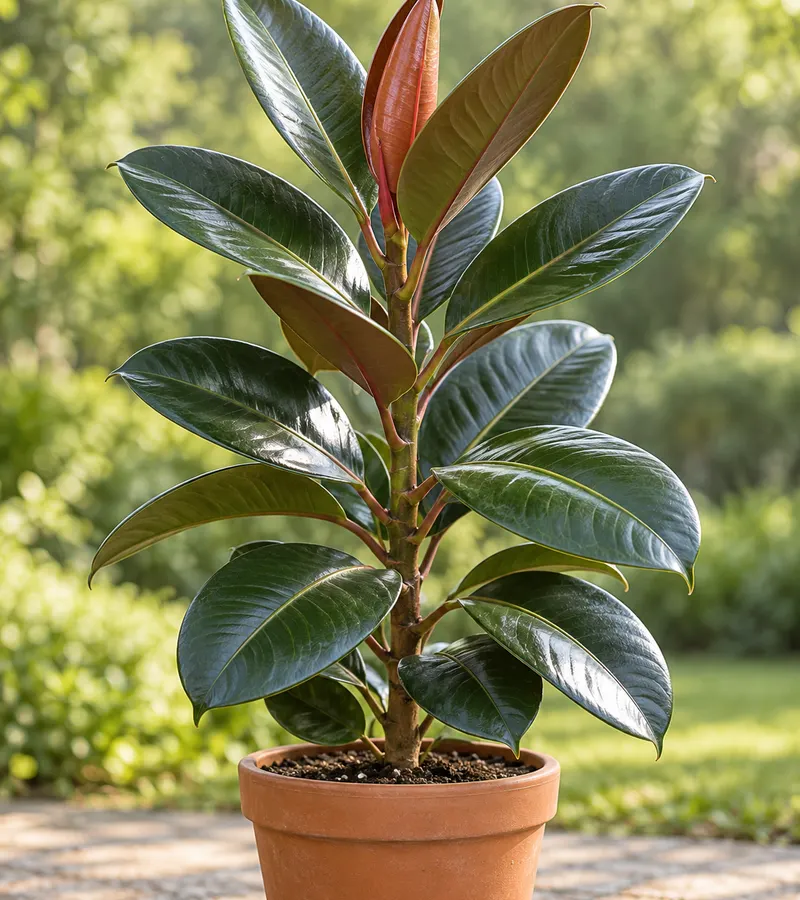
Thick glossy leaves with red-brown new shoots for a bright living room.
Care and placement
Prefers bright indirect light, tolerates medium light; water when the top 2–5 cm is dry; avoid cold drafts which cause leaf drop.
Draft mature dimensions
Maximum height (cm): 250 cm · Maximum spread (cm): 100 cm
Things to consider
The milky latex irritates skin; eating leaves or sap causes mild digestive upset in people and pets, and Ficus is listed by ASPCA as toxic to dogs and cats (ficin, psoralen). Wear gloves when pruning and wash off sap immediately.
How to grow and care for it
Planting and pot
Plant in a well-draining pot with a loose mix. It grows faster with root room; repot when roots fill the pot, usually every 2–3 years in spring.
Light
Bright indirect light is best; medium light works but new leaves are smaller. Afternoon sun scorches leaves; variegated types need more light to hold colour.
Watering
Water when the top 2–5 cm is dry; let it dry deeper when cool. Yellow lower leaves usually mean overwatering, and prolonged wetness rots roots.
Feeding
Balanced liquid fertilizer at half strength monthly from April to September; stop October to March since unused nutrients build up as salts.
Pruning
Prune in spring or early summer while growing. Cutting the tip makes it branch below; it tolerates hard pruning back to about 30 cm above soil. Wear gloves.
Propagation
Stem cuttings 15–20 cm with 2–3 nodes, or air layering: make a shallow cut below a node, prop it open with a toothpick, wrap in moist sphagnum and plastic; roots show in 4–8 weeks, then cut below and pot.
Pests and common problems
Relatively pest-free; root rot from overwatering is the main threat. Aphids may cluster on new growth and leaf undersides. Sudden leaf drop usually follows cold drafts, a move or a change in light.
For plentiful, healthy leaves
For a leafy, bushy plant: plenty of bright indirect light, light feeding in warm months, tip pinching to branch and regular dusting. Indoors it does not flower or fruit.