
Weeping fig
Ficus benjamina
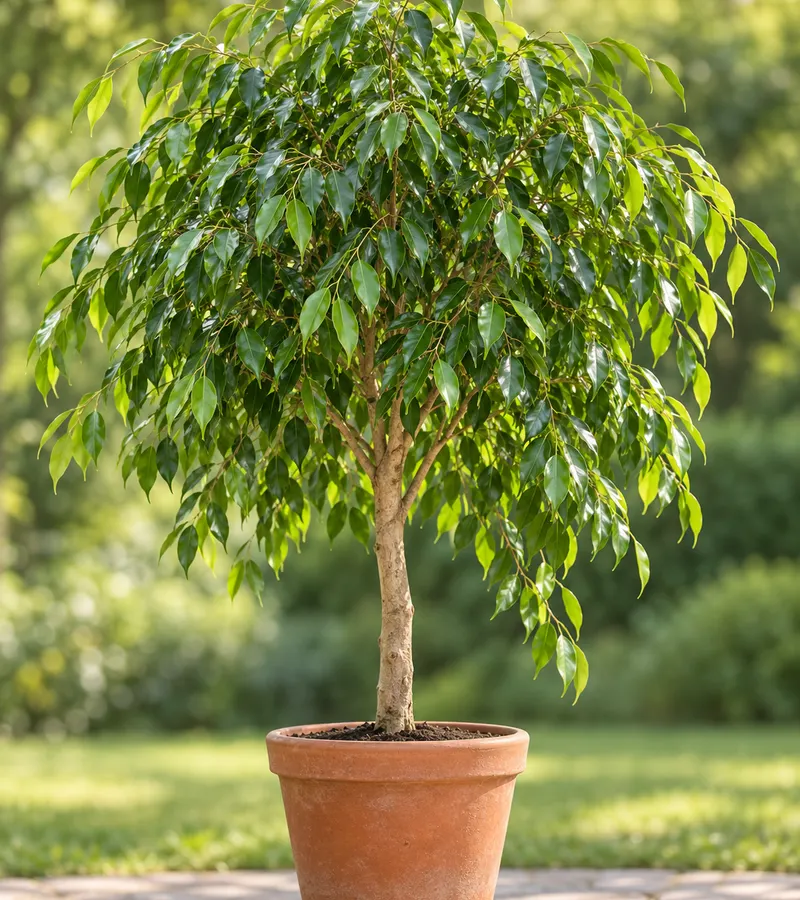
A softly weeping crown of small glossy leaves, common as ornamental and bonsai.
Care and placement
Prefers bright indirect light and a stable spot; keep the mix moderately moist, not soggy; drops leaves readily when moved, drafted or when light changes.
Draft mature dimensions
Maximum height (cm): 400 cm · Maximum spread (cm): 300 cm
Things to consider
The latex contains ficin and psoralen: it irritates the gut and skin and ASPCA lists it as toxic to dogs, cats and horses. Wear gloves when pruning; keep from children and pets.
How to grow and care for it
Planting and pot
Plant in a well-draining pot with a loose mix (or in the ground in warm areas). Repot when roots fill the pot, in early spring; it dislikes disturbance.
Light
Bright, steady indirect light. Harsh sun scorches leaves; too little light drops them.
Watering
Keep consistently moist but not soggy: water when the top 2–5 cm is dry, about every 2 weeks when cool. Overwatering rots roots; underwatering drops leaves.
Feeding
Balanced liquid fertilizer monthly in spring and summer, none when cool. If leaves drop despite proper care, it may need magnesium or manganese.
Pruning
Prune in late winter or early spring before new growth; never remove more than a third at once and wait 2–3 months between prunings. Wear gloves since the latex irritates.
Propagation
Semi-hardwood cuttings in spring or early summer: take a stem green at the top and woody at the base, let the base harden a few hours and root in water or mix; roots form in a few weeks. Seed and leaf-bud cuttings also work.
Pests and common problems
Leaf drop is the most common issue, usually stress from a move, change in light or temperature, wrong watering or drafts. Pests: aphids, mealybugs, scale, spider mites, whiteflies — inspect often and wipe or spray with insecticidal soap or neem oil.
For plentiful, healthy leaves
For a dense green canopy: keep it in one steady bright spot, water evenly, feed lightly in warm months and prune at the right time. Outdoors it becomes a large tree bearing small figs; indoors it rarely fruits.