
Queen of the night
Epiphyllum oxypetalum
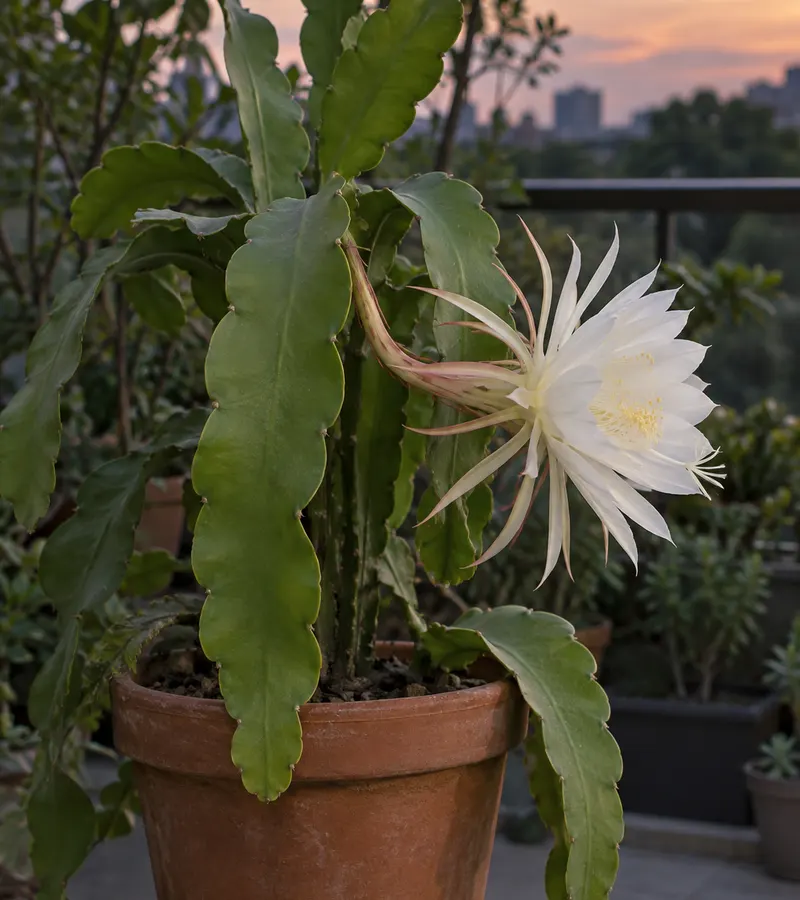
Large fragrant white flowers open for only a few hours at night.
Care and placement
Prefers bright indirect light (east or north window), an airy epiphytic-cactus mix and watering when the top 2–3 cm is dry; blooms with large fragrant flowers for a night in late spring to summer; likes a slightly snug pot.
Draft mature dimensions
Maximum height (cm): 200 cm · Maximum spread (cm): 100 cm
Things to consider
There is no official toxicity rating for this plant, so it is not claimed safe or toxic. Take care: do not eat it or use it as medicine, wear gloves and wash hands after pruning, and keep children and pets from chewing it.
How to grow and care for it
Planting and pot
Use an airy, fast-draining mix (epiphytic cactus compost, bark, perlite) in a pot with drainage holes; slightly snug roots help flowering. Repot when roots fill the pot.
Light
Bright indirect light near an east or north window; too little light gives leafy growth without flowers; avoid harsh afternoon sun which scorches stems.
Watering
Water when the top 2–3 cm is dry, usually every 1–2 weeks, less when cool; overwatering rots roots. Humidity about 50%. After flowering keep just moist for about 6 weeks (RHS).
Feeding
Balanced water-soluble fertilizer at half strength monthly in the growing season; potassium-rich feed supports flowering; none in cool months.
Pruning
Cut damaged or dry stems at the base; long stems can be trimmed for cuttings after flowering.
Propagation
Take stem cuttings of about 15 cm in late spring to early summer just after flowering: let the cut dry and callus for a few days, insert it in the mix in bright indirect light; resistance to a gentle tug means roots have formed. They also root in water.
Pests and common problems
Overwatering causes root and stem rot; low light means no flowers. Young plants bloom less reliably than older, larger ones.
For more flowers
To bloom: enough bright indirect light, a slightly snug pot, potassium-rich feed in the growing season and a cooler, drier rest after flowering. Huge, very fragrant white flowers open at dusk and close the next morning.