
Song of India
Dracaena reflexa
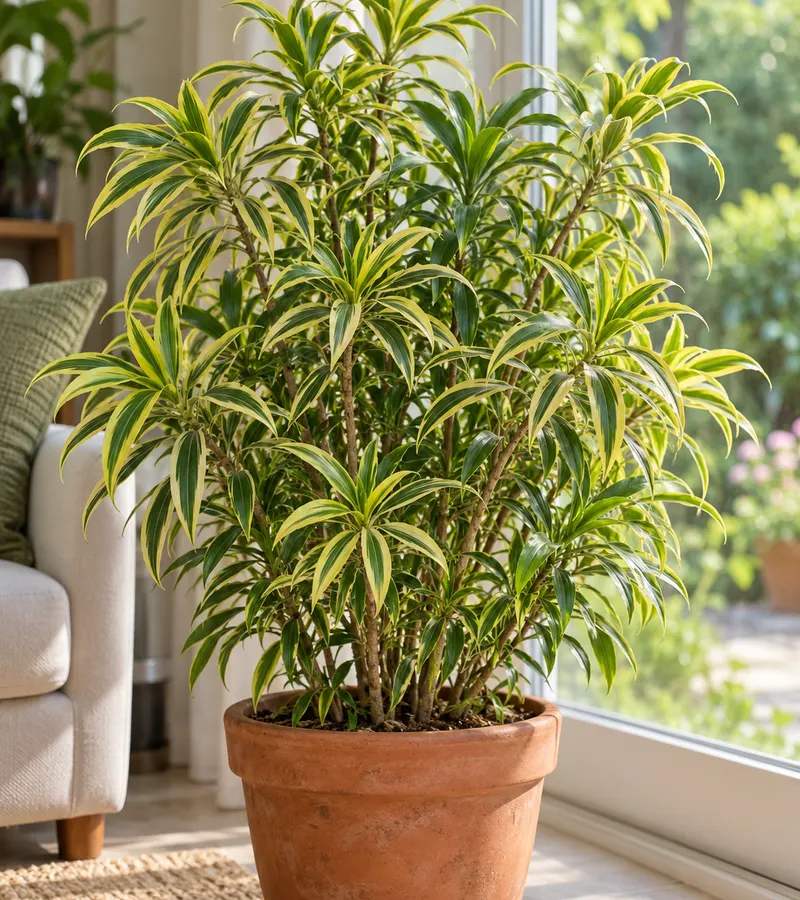
Narrow leaves spiral around the stems, and the green blades edged in cream-yellow brighten a room corner.
Care and placement
Prefers bright indirect light such as an east window with a sheer curtain; it tolerates dim spots but grows slower and the yellow edge dulls; let the top 2–5 cm of mix dry before watering; use filtered water because it is sensitive to fluoride.
Draft mature dimensions
Maximum height (cm): 180 cm · Maximum spread (cm): 90 cm
Things to consider
ASPCA lists the Dracaena genus as toxic to dogs and cats: vomiting (sometimes bloody), loss of appetite, heavy drooling, lethargy, and dilated pupils in cats. None of the sources here rates its toxicity to people, so keep small children from chewing or eating the leaves and wear gloves when pruning.
How to grow and care for it
Planting and pot
Plant in a pot with drainage holes and a loose, fast-draining mix. The plant branches into a bush as it grows, so pick a pot with a wide base to keep it from tipping, and move up a size only once the roots are crowded.
Light
It does best in an east-facing window, or a few steps back from a strong south or west window; direct sun scorches the leaves. Dim spots are survivable, but growth slows, stems stretch and the yellow edge fades. A windowless room needs a grow light on through the day; no source gives a specific lux figure.
Watering
Let the top 2–5 cm of mix dry out before watering, usually every 1–2 weeks, and water until it runs from the bottom. Too much water yellows the leaves and turns stems mushy. It is sensitive to fluoride, so use filtered or distilled water to prevent leaf-tip burn.
Feeding
Feed with a balanced water-soluble or liquid fertiliser in spring and summer; sources suggest about every two weeks during active growth, so in dim spots dilute it and feed less often. Taper off late in the year and stop while the plant rests.
Pruning
Trim leggy stems and yellowing leaves with sharp, clean shears to encourage a bushier plant. Cut stems at the height you want; new shoots usually sprout below the cut.
Propagation
In spring take stem cuttings at least 15 cm long with at least two nodes: root them in filtered water with the nodes submerged or in a peat and perlite mix, in bright indirect light at about 21–24 °C. Roots usually form within a few weeks; tall plants can be air-layered with moist moss.
Pests and common problems
Spider mites and mealybugs are the main pests: isolate an infested plant and treat it with neem oil or insecticidal soap. Brown tips come from underwatering, sun, dry air or fluoride; yellow leaves usually mean overwatering; cold drafts or sudden temperature swings drop leaves, and below about 10 °C it can be badly damaged.
For plentiful, healthy leaves
To keep the yellow edge bold and the plant full: give enough bright indirect light (dim light dulls the edge), use filtered water, trim leggy stems regularly and rotate the pot now and then so it grows evenly.