
Cylindrical snake plant
Dracaena angolensis
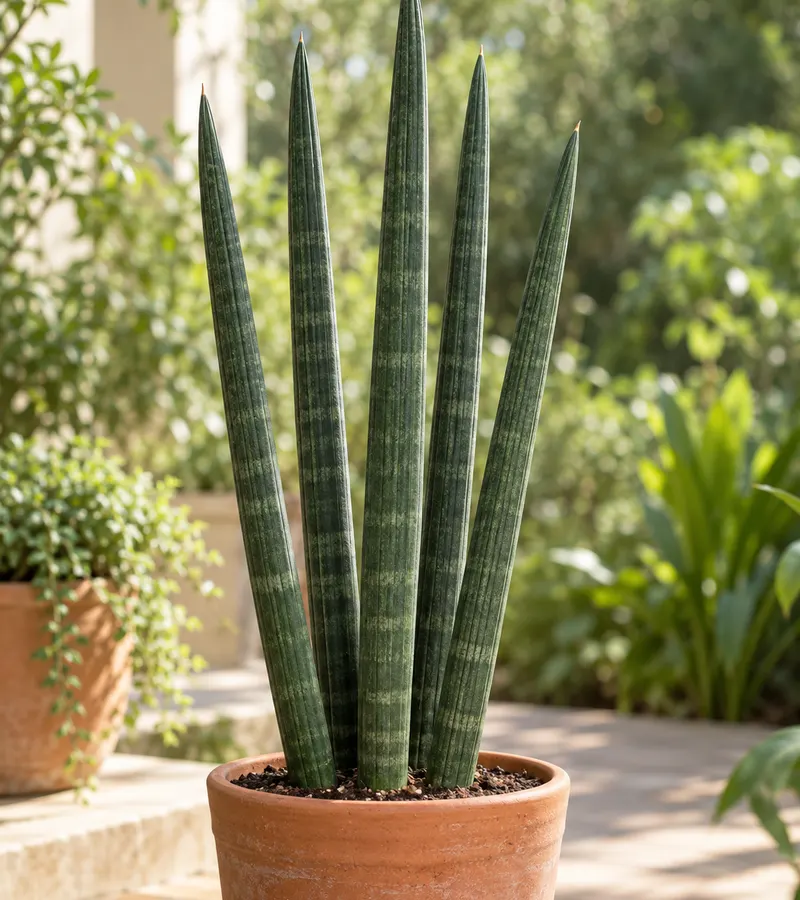
A snake plant with stiff, round, spear-like leaves rising from the base and good drought tolerance; NC State lists it as toxic to cats and dogs, and the sap can irritate skin.
Care and placement
Needs a brightly lit window indoors or part shade, with only morning sun if kept outside; a gritty cactus-type mix, watering about every 2 weeks in summer and monthly in winter; bring it indoors below about 13 °C.
Draft mature dimensions
Maximum height (cm): 120 cm · Maximum spread (cm): 40 cm
Things to consider
NC State lists the plant as toxic to cats and dogs (saponins; vomiting, drooling, weakness), says people should not eat it, and notes the sap can irritate skin. Keep it away from children and pets and wear gloves when pruning or repotting.
How to grow and care for it
Planting and pot
Plant in a pot with drainage holes in a fast-draining mix; NC State recommends cactus and succulent mix. Choose a heavy, wide-based pot because the leaves can grow very tall. Place it at a bright window or on a balcony with morning sun, and keep it outside only while temperatures stay above about 13 °C.
Light
Indoors it needs a brightly lit window; outdoors NC State advises only morning sun in summer because harsh sun can burn the leaves. The Vietnamese source says it suits indirect or moderate light and does not need long hours of hard sun. No source gives a minimum lux or says it thrives in the dark, so treat a dim corner as a temporary spot only, and give a windowless room a plant grow light for many hours a day.
Watering
The plant is drought tolerant: water about every two weeks in the growing season and about monthly in the cold season, and only once the mix has dried. Avoid long spells of wetness, which cause rot; in an air-conditioned room water evaporates slowly, so wait longer before watering again.
Feeding
None of the sources read gives a feeding schedule. The plant grows slowly and needs little care, so feed very lightly with diluted fertiliser in the warm season if at all and skip it in the cold.
Pruning
Little pruning is needed: just cut off rotten, broken or damaged leaves at the base. Use a clean knife and wear gloves because the sap can irritate skin, and wash your hands afterwards.
Propagation
NC State says the plant is commonly sold as rooted leaf cuttings, with new plants growing from the base of the cutting. Growth is slow, so be patient with a new plant.
Pests and common problems
The biggest risk is waterlogging, which causes rot; NC State also lists banded greenhouse thrips, fern scale and longtailed mealybug. Harsh direct sun can burn the leaves, and NC State advises bringing the plant indoors when temperatures fall below about 13 °C, so move it inside during a cold snap.
For plentiful, healthy leaves
For a healthy, handsome plant: a bright window, sparse watering by how dry the mix is, a fast-draining mix and no harsh sun. In a pot it may occasionally bloom with fragrant white flowers in summer, but the main value is the upright round leaves.