
String of pearls
Curio rowleyanus
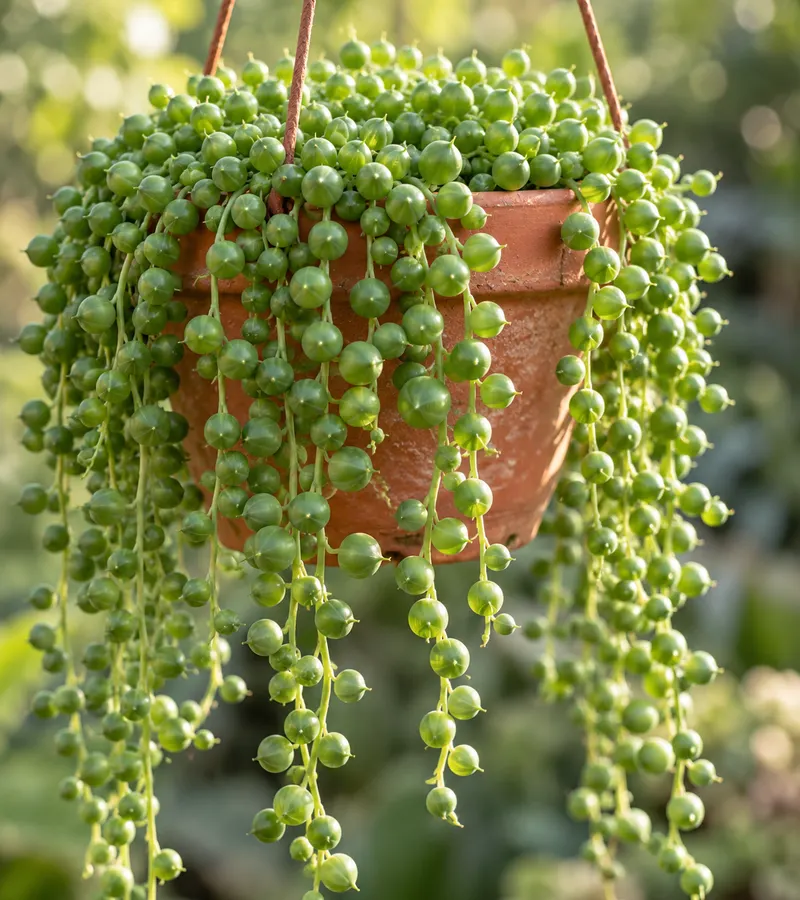
Trailing strands of round bead-like leaves that need a bright spot.
Care and placement
Needs bright light (bright indirect to a few hours of gentle sun), a very gritty mix and infrequent watering; overwatering is the easiest way to kill it; 18–27 °C and dry air.
Draft mature dimensions
Maximum height (cm): 60 cm · Maximum spread (cm): 40 cm
Things to consider
The plant contains pyrrolizidine alkaloids: sap irritates skin, and eating it causes vomiting, diarrhea, drooling and lethargy; the genus Senecio is listed by ASPCA as toxic to dogs, cats and horses. Hang it out of reach of children and pets.
How to grow and care for it
Planting and pot
Use a gritty, very free-draining mix (cactus mix or soil, coarse sand and perlite 1:1:1) in a shallow hanging pot with drainage holes.
Light
Bright light: bright indirect or 2–3 hours of gentle morning or late sun. Low light stretches strands and makes small, spaced pearls.
Watering
Water only when the top half of the mix is completely dry: about every 10–14 days in bright summer, 3–4 weeks when cool or dim; bottom watering keeps the surface dry. Persistently shriveled pearls mean thirst or heat (a deep soak re-plumps them within a day); bursting, mushy or yellow pearls mean too much water.
Feeding
A very light feeder: diluted cactus fertilizer once or twice in the growing season.
Pruning
Remove damaged or bare strands; overlong strands can be trimmed to thicken the plant and used as cuttings.
Propagation
Very easy: take 10 cm tip cuttings and lay them lightly covered on moist mix; roots form quickly at the nodes; or strip the base leaves, let them callus for 1–2 days and plant. Roots form in a few weeks. Water rooting is for starting only, then move to soil.
Pests and common problems
Mainly rot from overwatering; shriveled pearls from drought or heat, mushy ones from excess water. Mealybugs and aphids may occur.
For plentiful, healthy leaves
For long, plump strands: bright light, a gritty draining mix, correct sparing water and good airflow in a hanging pot. With enough light it may bear small white cinnamon-scented flowers in late winter.