
Crepe myrtle
Lagerstroemia indica
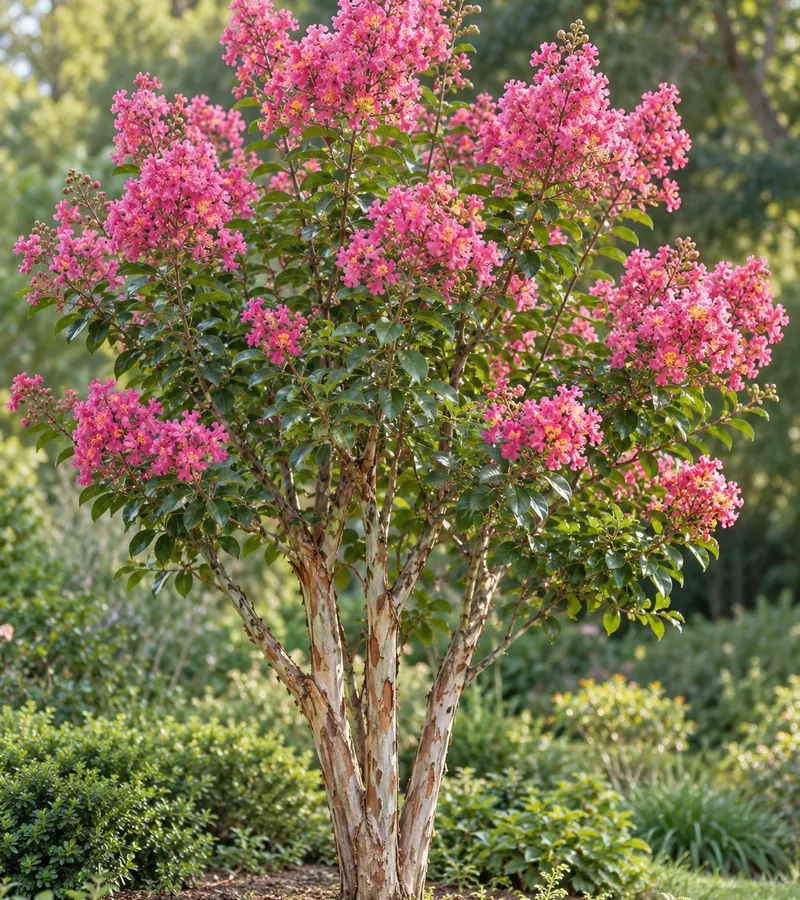
Seasonal flowers and branching forms for gardens and shared spaces.
Care and placement
Needs full sun, 6–8 hours, and well-drained soil; flowers on new wood so prune lightly in late winter; does not need heavy feeding.
Draft mature dimensions
Maximum height (cm): 600 cm · Maximum spread (cm): 500 cm
Things to consider
ASPCA lists Lagerstroemia indica (crape myrtle) as non-toxic to dogs, cats and horses. Still discourage pets from chewing bark or leaves.
How to grow and care for it
Planting and pot
Dig the hole 2–3 times wider than the root ball but only as deep as it; planting too deep suffocates roots. Pick well-drained soil, avoid standing water, and mulch away from the trunk.
Light
Full sun, at least 6–8 hours; shade reduces growth and flowering and encourages powdery mildew and sooty mould.
Watering
Water young plants regularly until established; mature plants tolerate drought fairly well. Standing water around roots causes root rot. Water at the base rather than overhead to limit powdery mildew.
Feeding
Not heavy feeders: a slow-release fertilizer in early spring is enough; decent soil may need none. Excess nitrogen gives leaves instead of flowers and invites disease.
Pruning
Prune in winter or late winter since flowers form on new wood; keep it light (remove weak or crossing branches) and avoid severe topping ('crape murder'), which causes suckering. Removing seed capsules and old bloom stalks after flowering can trigger a second flush.
Propagation
Semi-hardwood cuttings in summer or hardwood cuttings in winter in moist, draining mix; seed is also possible. (Method per gardening sources.)
Pests and common problems
Powdery mildew in shade, crowding and humid, still air — plant in sun with airflow and choose resistant cultivars; sticky aphid honeydew leading to sooty mould — blast with water; crape myrtle bark scale (white-grey felty patches) — dormant oil in winter. Ask your local extension office for suitable controls.
For more flowers
For more flowers: full sun, light pruning in late winter, removing seed heads after bloom, little nitrogen and good airflow. It bears pink, purple or white clusters in the warm season.