
Cuban oregano
Coleus amboinicus
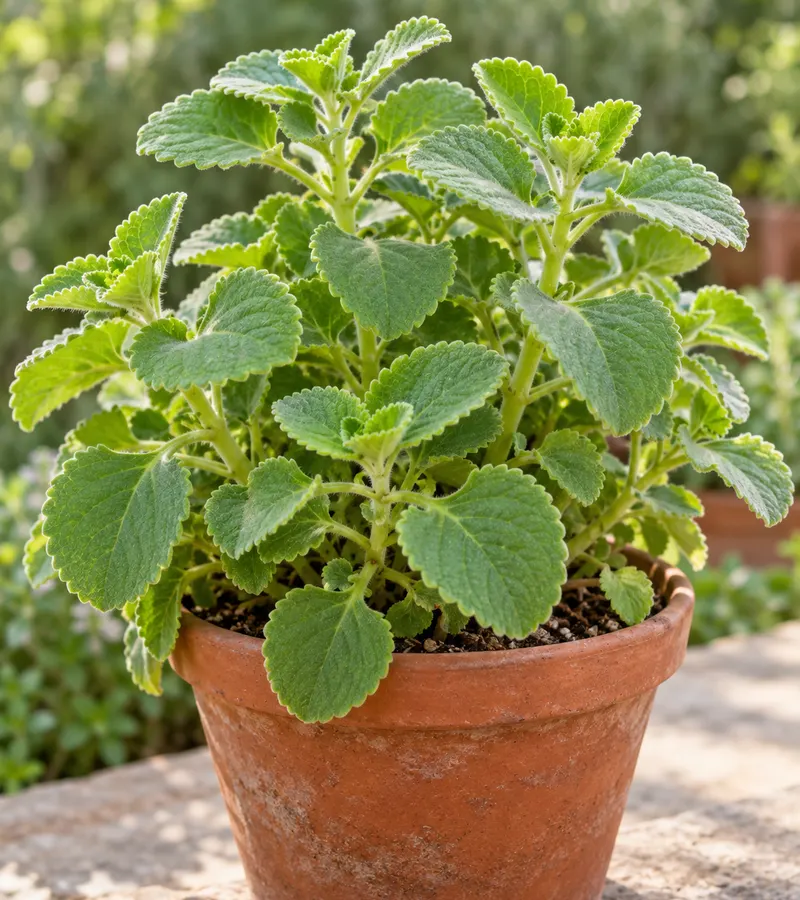
Thick fleshy aromatic leaves, grown in pots as a folk-cough remedy and seasoning.
Care and placement
Prefers shelter from hot sun, very well-drained soil, sparing water (drought-tolerant) and 20–30 °C; very easy from cuttings; never prune more than half the foliage at once.
Draft mature dimensions
Maximum height (cm): 40 cm · Maximum spread (cm): 50 cm
Things to consider
ASPCA lists Coleus amboinicus (Cuban oregano) as toxic to dogs, cats and horses (essential oils: vomiting, diarrhea, anorexia, sometimes bloody); sources describe it as not dangerous to people, used as a seasoning in moderate amounts. Keep pets from chewing it.
How to grow and care for it
Planting and pot
Plant in a pot or ground with very free-draining mix (add sand or perlite); pots need drainage holes; bring indoors near a bright window when cold.
Light
Bright light with shelter from hot midday sun; prolonged harsh sun burns leaves and hot regions need part shade (RHS: full light under glass, shaded from hot sun).
Watering
Drought-tolerant: let soil dry between waterings; wet soil causes root rot. RHS: water freely while growing, moderately in winter.
Feeding
RHS: balanced liquid fertilizer monthly in the growing season.
Pruning
Prune often for a bushy plant: take up to about a third (never more than half) of the foliage at a time; the leaves are oil-rich and hard to dry.
Propagation
Very easy from cuttings in any season (RHS): take 10–15 cm tips, strip lower leaves, root in water (change every 1–2 days) for 2–4 weeks and pot when roots are about 2.5 cm. Division in spring also works.
Pests and common problems
Spider mites and mealybugs can damage it; root rot if waterlogged. Treat with insecticidal soap or neem oil; let soil dry between waterings.
For a bigger harvest
For thick, plentiful leaves: light shade, sharp drainage, sparing water, light monthly feeding and frequent pruning (a third at a time). Fleshy leaves smell strongly of oregano.