
Kumquat
Citrus japonica
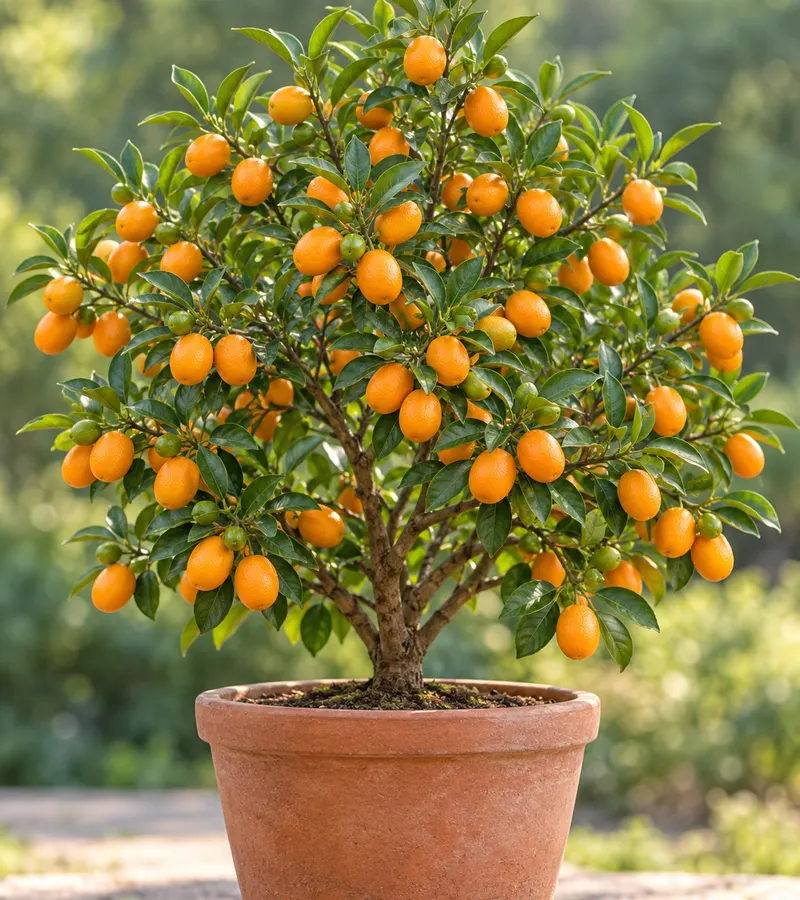
Dense small orange fruit, the emblematic Tết ornamental of the north.
Care and placement
Needs 6–8 hours of sun, well-drained soil and a large pot with drainage holes; water when the top 2–4 cm is dry; citrus fertilizer with low nitrogen; prune in late winter; usually grafted.
Draft mature dimensions
Maximum height (cm): 150 cm · Maximum spread (cm): 100 cm
Things to consider
Citrus: ASPCA lists oranges, lemons and limes as toxic to dogs, cats and horses due to essential oils and psoralens (vomiting, diarrhea, possible photosensitivity) — peel and leaves are not for pets. Kumquat fruit is edible for people, but seeds and leaves should not be eaten.
How to grow and care for it
Planting and pot
Use a large pot (it does not tolerate being root-bound) with a well-draining mix and drainage holes; repot every 2–3 years. It is usually grafted: remove shoots below the graft right away since they are rootstock.
Light
Needs 6–8 hours of direct sun daily; light afternoon shade in very hot places limits leaf scorch. Strong light is needed to flower and fruit.
Watering
Keep the mix moist but not wet; water when the top 2–4 cm is dry, less in cool months. Wilting with wet soil usually means root rot from overwatering or poor drainage.
Feeding
A slow-release citrus fertilizer in spring plus occasional diluted liquid feed (e.g. fish emulsion), or a balanced citrus feed every 6–8 weeks for pots. Too much nitrogen impedes fruiting; stop late-season feeding.
Pruning
Prune in late winter to early spring before new growth: remove dead or crossing branches and rootstock shoots; thin to open the canopy to light and air.
Propagation
Kumquats are grafted onto other citrus rootstock because seed- or cutting-grown roots are weak; seed and cuttings are possible but yield weaker plants. Buying a grafted plant is the most reliable route.
Pests and common problems
Aphids, mealybugs and scale (insecticidal soap); citrus leafminer tunnels in new leaves (spinosad at first sign); thrips distort leaves with excess nitrogen or overwatering. Wilting with wet soil means root rot.
For heavy fruiting
For heavy fruiting: 6–8 hours of sun, even watering, adequate citrus feeding without excess nitrogen, an open canopy and a roomy pot. The small orange fruits ripen in numbers, suiting Tết displays when well cared for.