
Parlor palm
Chamaedorea elegans
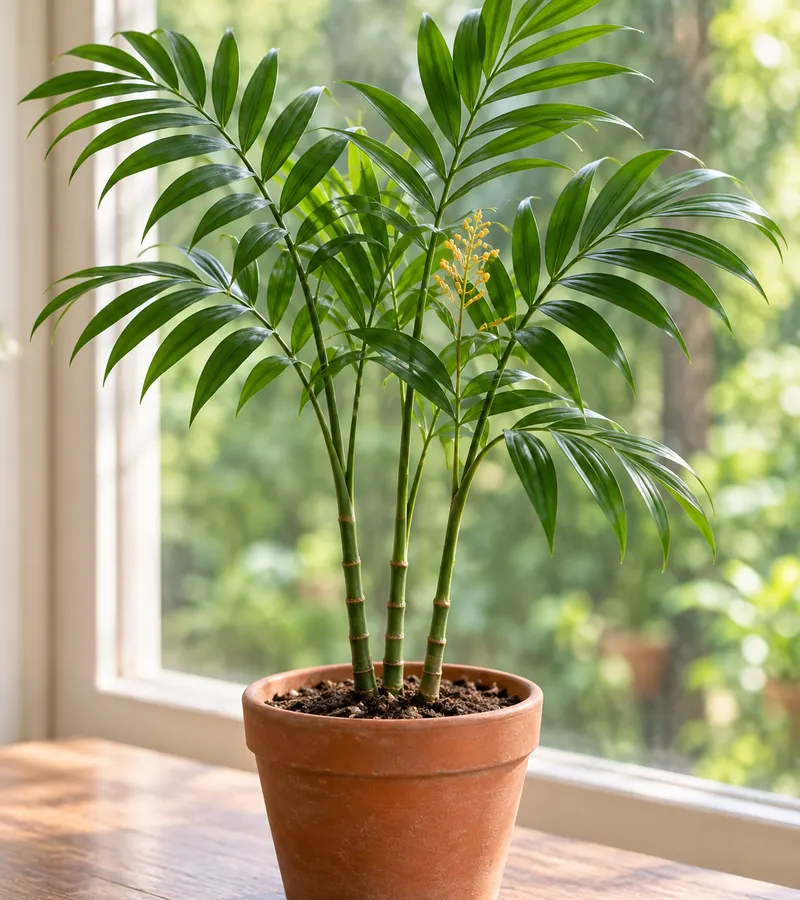
A small palm with slender green fronds that tolerates dimmer corners.
Care and placement
Prefers bright indirect light and tolerates low light with slow growth; water when the top 2–3 cm is dry, preferably with filtered water since it is sensitive to fluoride and chlorine.
Draft mature dimensions
Maximum height (cm): 100 cm · Maximum spread (cm): 60 cm
Things to consider
ASPCA lists parlor palm (Chamaedorea elegans) as non-toxic to dogs, cats and horses. Sap and fruit juice may mildly irritate skin; still discourage pets from chewing fronds.
How to grow and care for it
Planting and pot
Plant in a well-draining pot with a loose mix. A small clumping palm; repot when roots fill the pot.
Light
Bright indirect light; lower light works but growth is slow and stems may stretch. Harsh sun burns fronds.
Watering
Water when the top 2–3 cm is dry, drench and empty the saucer; less in cool months but never let it dry out completely. Overwatering and root rot is the biggest threat.
Feeding
Water-soluble balanced fertilizer at half strength every 3–6 weeks in spring and summer; none in autumn and winter. Excess browns tips.
Pruning
Only cut fully dry or brown fronds at the base.
Propagation
It cannot be propagated by stem or leaf cuttings. The usual method is division: water the day before, unpot and separate the root ball along natural groups of stems; keep evenly moist but not soggy until established.
Pests and common problems
Mealybugs, spider mites and aphids; fungal or bacterial leaf spot and stem cankers. Treat with insecticidal soap or neem oil; avoid overwatering.
For plentiful, healthy leaves
For a lush green canopy: enough bright indirect light, clean water, light steady feeding in warm months, correct watering and division when crowded. It can bear small yellow flowers but is grown for foliage.