
Cockscomb
Celosia argentea
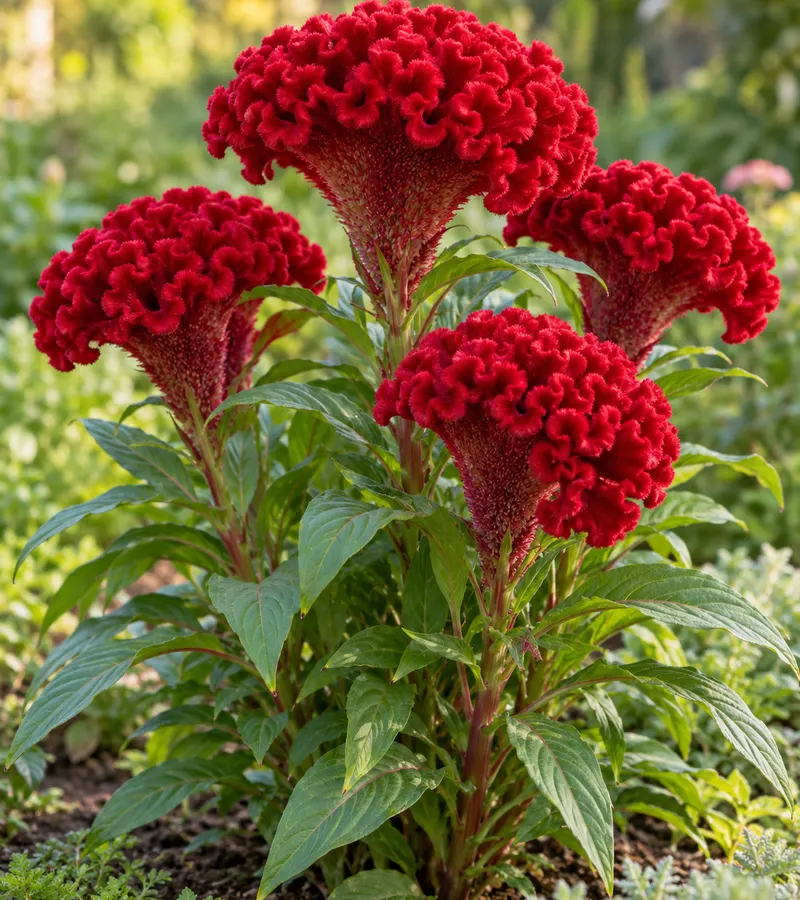
Velvety crest or plume flower heads in vivid red and orange.
Care and placement
Needs full sun (6–8 hours), watering when the top 2–5 cm is dry without wetting flower heads; warmth; young leaves and flowers are edible (spinach-like).
Draft mature dimensions
Maximum height (cm): 70 cm · Maximum spread (cm): 40 cm
Things to consider
ASPCA lists Celosia species (cockscomb) as non-toxic to dogs, cats and horses. NC State notes young leaves and flowers and the seeds are edible. Eat only when the species is correctly identified and the plant is unsprayed; wash well.
How to grow and care for it
Planting and pot
Sow very small seed no deeper than 6 mm or on the surface, covered to hold humidity until at least half have germinated; soil about 16 °C or warmer; seedlings are prone to damping off. Rich, well-drained soil; avoid heavy clay.
Light
Full sun, 6–8+ hours; light afternoon shade in hot regions.
Watering
Drought-tolerant; water only when the top 2–5 cm is dry; it dislikes waterlogged or clay soil. Avoid wetting leaves and flower heads to prevent fungal rot.
Feeding
Balanced fertilizer (10-10-10 or 20-20-20) at 1/4–1/2 strength every 2–3 weeks from late spring to early autumn, or a phosphorus-rich feed monthly to maximise blooms.
Pruning
Pinch young plants at about 15 cm to branch; deadhead to prolong bloom; stop deadheading late in the season if you want it to reseed.
Propagation
Sow seed indoors in early to mid spring and transplant, or direct-sow once frost has passed; in Vietnam it can be sown year-round when warm. The seeds are edible too (a pseudocereal).
Pests and common problems
Minor pests: slugs, mites, aphids, whiteflies. Diseases are the bigger risk: leaf spot and root rot; crowding, rain and humidity rot the flower heads.
For more flowers
For big vivid crests or plumes: enough sun, sparing base watering, phosphorus-rich feeding, early pinching, open spacing and keeping flower heads dry.