
Madagascar periwinkle
Catharanthus roseus
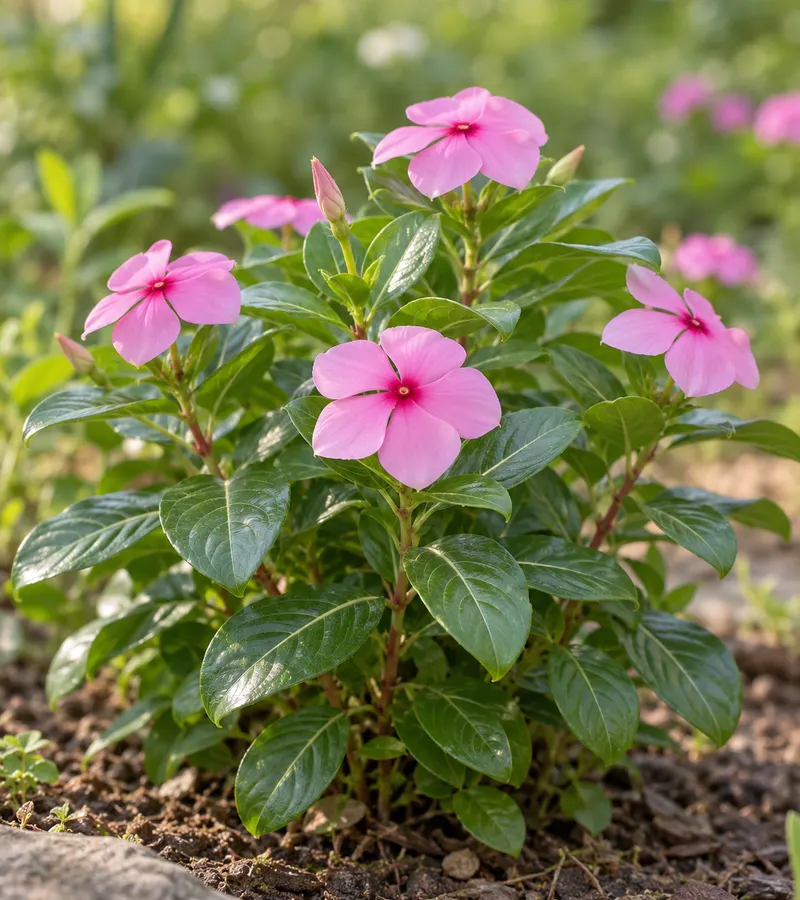
Five-petalled pink or white flowers bloom continuously and handle heat well.
Care and placement
Needs 4–6+ hours of sun, tolerates heat and drought once established; water at the base without waterlogging; little fertilizer; the WHOLE PLANT IS TOXIC (vinca alkaloids).
Draft mature dimensions
Maximum height (cm): 50 cm · Maximum spread (cm): 40 cm
Things to consider
TOXIC: every part contains vinca alkaloids; ASPCA notes vomiting, diarrhea, low blood pressure, tremors, seizures, coma and death in dogs, cats and horses; NC State rates it low severity. Wear gloves and wash hands after pruning; never self-medicate with it; keep from children and pets.
How to grow and care for it
Planting and pot
Plant in sun in well-drained soil (tolerates poor soil); pots need drainage holes. Sow seed 0.5–1 cm deep; in hot regions sow year-round.
Light
Full sun to part shade, at least about 4–6 hours of direct sun; limit hot western exposure in extreme heat.
Watering
Keep adequately watered but not waterlogged; once established it tolerates heat and drought. Overwatering causes root rot; water at the roots and avoid wetting leaves to limit fungal disease.
Feeding
No extra fertilizer in poor soil; if needed use diluted balanced liquid feed every 2 weeks to monthly. Too much gives lush foliage instead of blooms.
Pruning
Deadheading is not needed since flowers drop themselves; trim long shoots just above a leaf node for a compact, dense plant; large plants can be sheared lightly.
Propagation
Sow seed (about 21 °C, germinating in 2–3 weeks) or take 5–8 cm tip cuttings from new growth in late spring to summer, cut just below a node.
Pests and common problems
Aphids, spider mites and whiteflies; root-knot nematodes, Rhizoctonia root rot, sudden wilt (Spiroplasma citri), blight and Fusarium wilt in prolonged wet conditions. Water at the base and ensure airflow.
For more flowers
For continuous flowers: enough sun, lean well-drained soil, sparing water, little fertilizer and a light shear when leggy. Five-petalled pink or white flowers open almost year-round in hot places.