
Japanese camellia
Camellia japonica
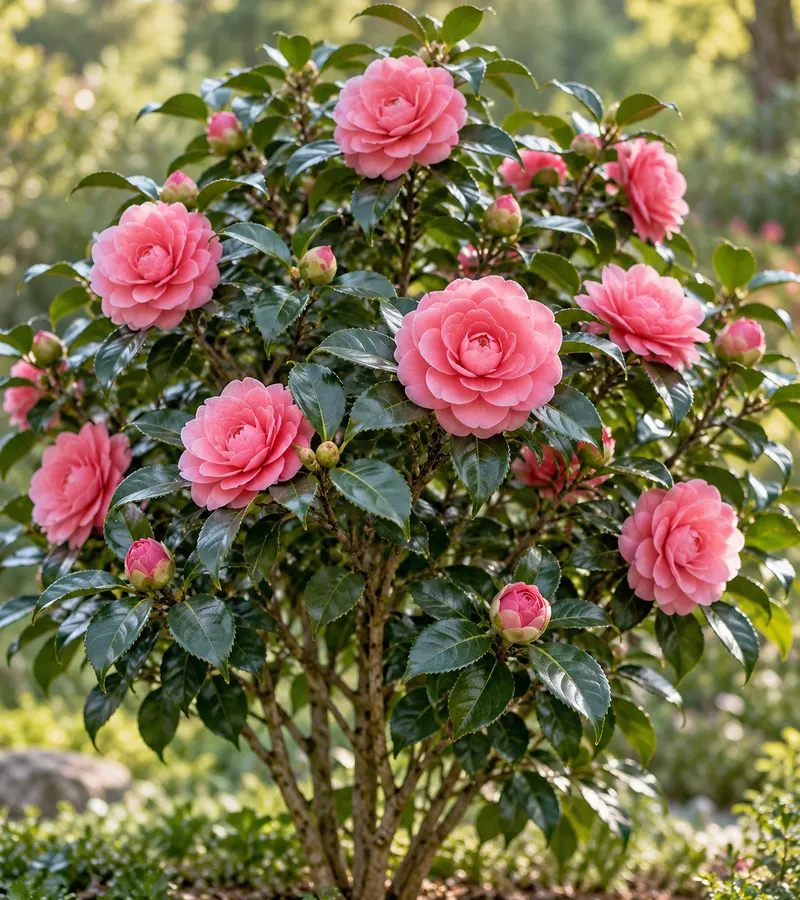
Many-layered rounded blooms that favour the cooler climate of the highlands.
Care and placement
Prefers part shade or filtered light, slightly acidic (pH 5.5–6.5), humus-rich well-drained soil, even moisture and a cool climate; do not move the pot once buds form.
Draft mature dimensions
Maximum height (cm): 200 cm · Maximum spread (cm): 150 cm
Things to consider
ASPCA lists Camellia japonica as non-toxic to dogs, cats and horses. Still discourage pets from chewing large amounts of leaves or buds.
How to grow and care for it
Planting and pot
Plant in part shade sheltered from drying winds, in humus-rich, slightly acidic (pH 5.5–6.5), well-drained soil; lime causes chlorosis and root damage. Pots need drainage holes; do not plant too deep.
Light
Part shade to filtered or dappled light; avoid harsh sun. In Vietnam it suits cool areas such as the highlands or mountains.
Watering
Keep soil evenly moist, not soggy; rain water is best (let tap water stand 24 hours). Drought late in the growing season hurts next year's flowering. Under- or overwatering, sudden temperature change or moving the pot all drop buds.
Feeding
Use an acid-forming fertilizer for azaleas, rhododendrons and camellias; a slow-release can be applied three times a year (early spring, after flowering, midsummer); stop from late summer into autumn. Too much nitrogen gives leaves over flowers.
Pruning
Rarely needed: remove dead or damaged wood, unproductive branches and overlong shoots, immediately after flowering.
Propagation
Commonly semi-hardwood cuttings in late summer or grafting (the sources checked give little detail on cuttings). Buying a grafted or rooted young plant is the simplest route for beginners.
Pests and common problems
Aphids, scale and spider mites (sometimes mealybugs and whiteflies); diseases include petal blight in damp conditions — avoid overhead watering — and root rot from poor drainage. Chlorosis in alkaline or limy soil.
For more flowers
For more flowers: part shade, acidic soil, steady watering (especially late summer), on-schedule acid-plant feeding, little nitrogen, no moving of the pot once in bud and pruning right after flowering.