
Climbing ylang-ylang
Artabotrys hexapetalus
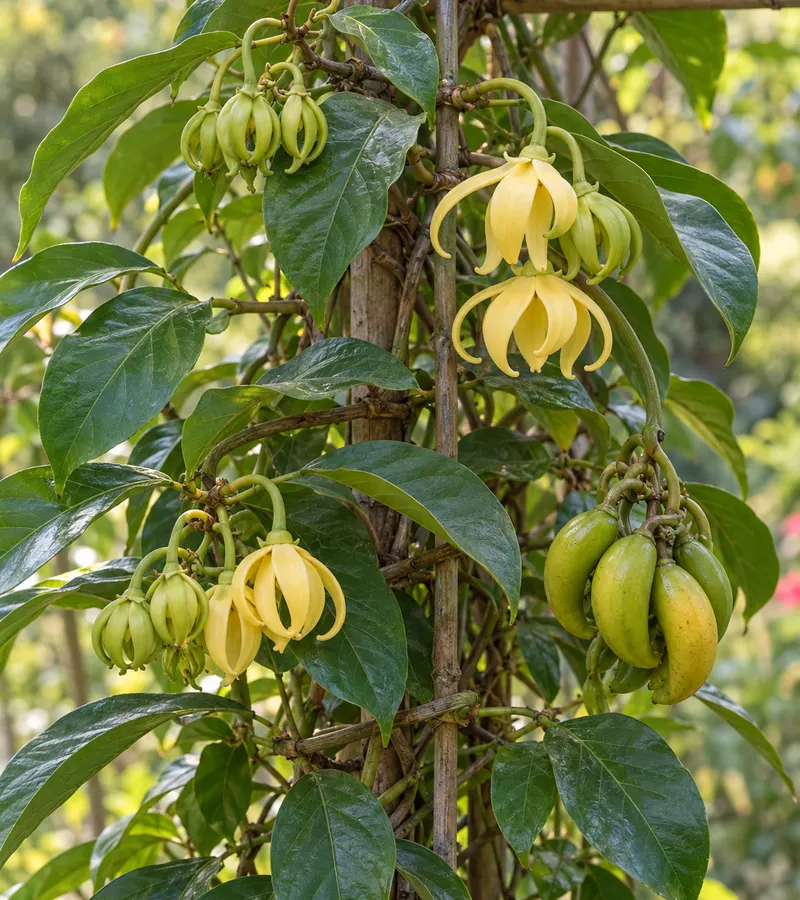
Fruity-scented yellow-green flowers, with hooked stalks that cling to a trellis.
Care and placement
Likes full sun to part shade, regular water to keep foliage lush, little pruning or feeding; climbs with hooked branches so give a trellis; can spread aggressively; frost-sensitive.
Draft mature dimensions
Maximum height (cm): 400 cm · Maximum spread (cm): 200 cm
Things to consider
There is no official toxicity rating for this plant, so it is not claimed safe or toxic. Take care: do not eat it or use it as medicine, wear gloves and wash hands after pruning, and keep children and pets from chewing it.
How to grow and care for it
Planting and pot
Plant in sun or part shade with a sturdy support (trellis, pergola, fence) for the hooked branches; any soil is fine as long as water is ample. A large pot works, and pruning keeps it a bush of 1.5–3 m.
Light
Full sun to part shade; keep it somewhere warm and away from frost.
Watering
Needs regular water to keep evergreen foliage lush; let the topsoil dry slightly between waterings. Salt-tolerant.
Feeding
Only occasional fertilizer is needed, for example once at the start of the growing season.
Pruning
Little pruning needed; prune to keep a bush or a tidy climber; it can escape cultivation and spread quickly so keep an eye on it.
Propagation
Seed: scarify the hard coat with sandpaper or a nick, soak in warm water 24–48 hours, sow 0.5–1 cm deep in well-draining mix, keep warm at 24–27 °C and evenly moist; germination takes a few weeks to a few months.
Pests and common problems
Few problems are reported; the main issue is aggressive spread in warm regions (weedy in parts of Hawaii) — remove fruit and keep it in a pot or on a trellis.
For more flowers
For many fragrant flowers: enough sun, even water, a sturdy support and light pruning. Green-yellow flowers smell like ripe jackfruit and open from mid-spring to late summer, drawing butterflies.