
Areca palm
Dypsis lutescens
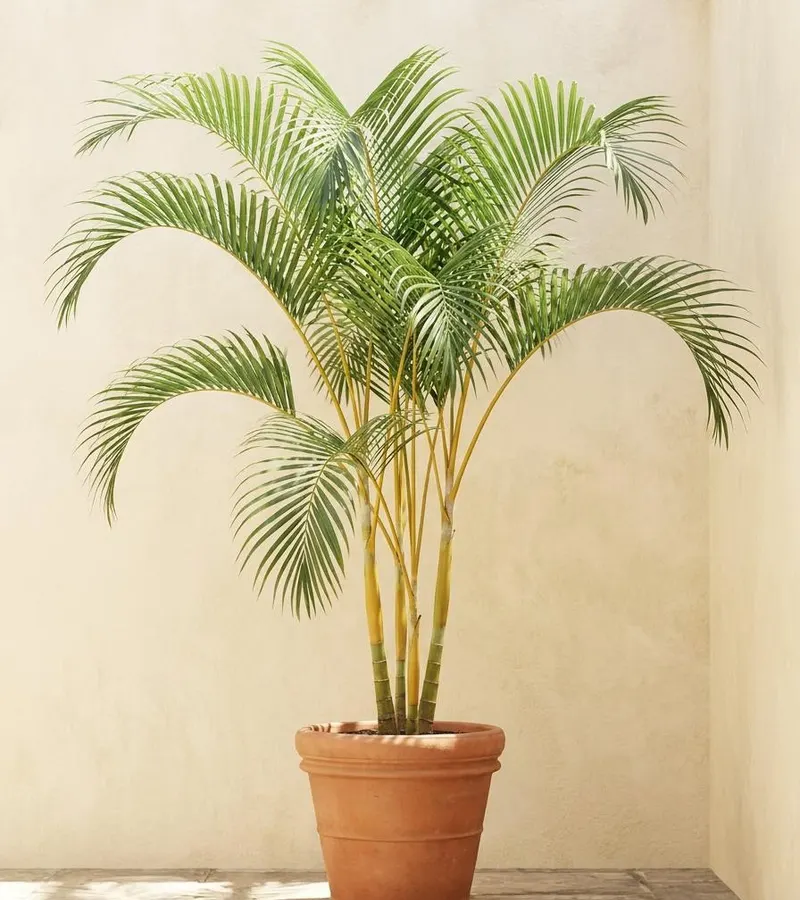
Wide, airy fronds suggest a courtyard layered with green.
Care and placement
Prefers bright indirect light (east or west window) and is not a low-light palm; water when the top 2–3 cm is dry, using filtered or rain water since it is fluoride-sensitive.
Draft mature dimensions
Maximum height (cm): 600 cm · Maximum spread (cm): 300 cm
Things to consider
ASPCA lists areca palm (Dypsis lutescens) as non-toxic to dogs, cats and horses. Still discourage pets from chewing fronds.
How to grow and care for it
Planting and pot
Use a deep, well-draining pot with a loose mix. It grows as a multi-stemmed clump; a snug pot is fine, repot when roots fill it in late spring.
Light
Bright indirect light; east or west windows are ideal. In a dim corner it thins and stops producing fronds; harsh sun bleaches and yellows them.
Watering
Water until it drains, empty the saucer and let the top 2–3 cm dry before the next watering (about every 6–8 days in summer, 11–17 days when cool). Brown tips come from low humidity or chlorinated/fluoridated water.
Feeding
Water-soluble balanced fertilizer (or a palm fertilizer with magnesium and manganese) at half strength monthly in spring and summer; none in autumn and winter. Yellow bands with green veins mean magnesium deficiency (Epsom salts can help); orange-yellow spots on old fronds mean potassium deficiency; interveinal yellowing calls for chelated iron.
Pruning
Only cut fronds that are fully dry or yellow, at the base. Never cut the growing point at the top of a cane; that cane will die.
Propagation
Divide in late spring to early summer with a sharp knife, each division with good roots and at least 3–4 canes (often 80–90% success). Seed is slower: keep 24–27 °C and moist; germination takes up to 6 weeks.
Pests and common problems
Spider mites, mealybugs and scale: rinse in the shower, spray insecticidal soap or 1:1 isopropyl alcohol weekly for 3 weeks and keep humidity above 45%; wipe mealybugs with alcohol or use neem. One old lower frond yellowing is normal; several at once with wet soil mean overwatering.
For plentiful, healthy leaves
For a full, glossy canopy: enough bright indirect light, clean water, steady feeding including magnesium, humidity and scheduled watering; divide when crowded. It rarely flowers or fruits indoors.