
Aloe vera
Aloe vera
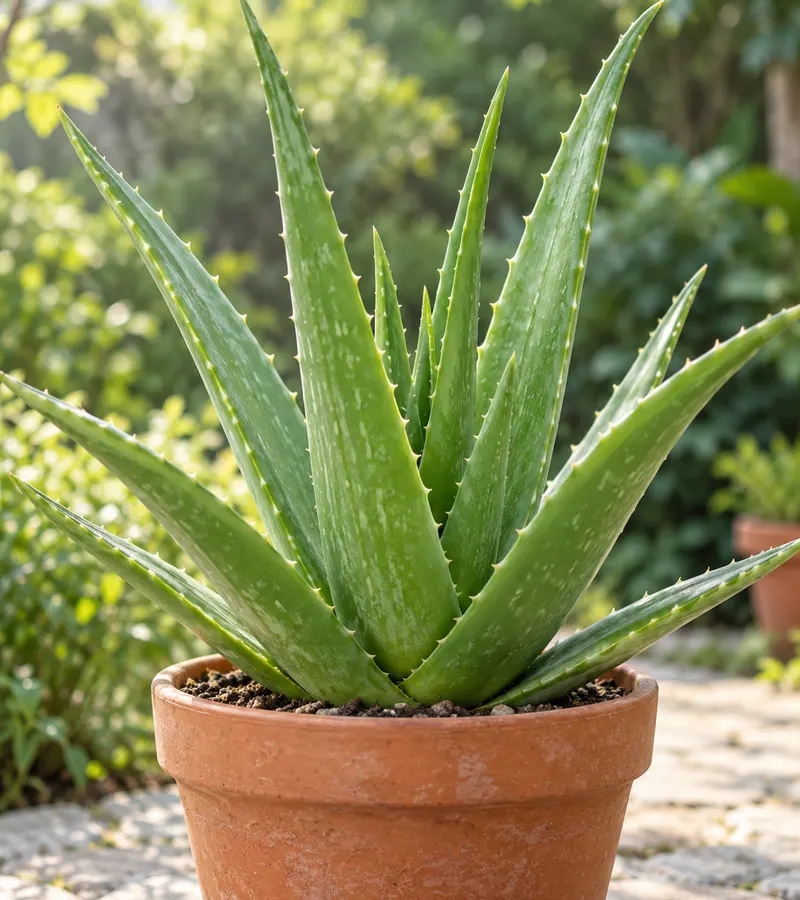
Fleshy rosette leaves, familiar both as ornament and household plant.
Care and placement
Needs plenty of light (4–6 hours of sun or a very bright window), deep but infrequent watering and a fast-draining mix; tolerates being pot-bound; keep water out of the rosette centre.
Draft mature dimensions
Maximum height (cm): 60 cm · Maximum spread (cm): 60 cm
Things to consider
ASPCA lists aloe as toxic to dogs, cats and horses (saponins, anthraquinones): vomiting, lethargy, diarrhea, red urine; only the gel is considered edible, while the yellow latex under the rind can cause diarrhea. Keep pets from chewing leaves.
How to grow and care for it
Planting and pot
Use a fast-draining cactus mix (add coarse sand or perlite if needed) in a pot with drainage holes that is not oversized. Aloe tolerates being pot-bound, which lowers the risk of rot.
Light
Needs bright light, ideally 4–6 hours of direct sun. In low light leaves become tall and thin and the plant is more prone to root rot.
Watering
Water deeply but infrequently, letting the mix dry 3–5 cm down: about every 2–3 weeks when warm and 4–6 weeks when cool. Keep water out of the rosette centre to avoid rot. Translucent, soft, mushy leaves at the base signal overwatering.
Feeding
Feed no more than monthly and only in spring and summer with a balanced houseplant fertilizer at half strength; stop in cool months.
Pruning
Cut old, dry or damaged leaves at the base; remove spent flower stalks.
Propagation
Separate pups at least 5–7 cm tall with 4–5 leaves and their own roots: pull apart or cut the runner with a clean knife, let the cut callus for 1–3 days, plant in dry cactus mix and wait at least a week before watering. Leaf cuttings almost always rot.
Pests and common problems
Mealybugs and scale are the main pests, occasionally aphids; use neem oil or insecticidal soap. Overwatering causes soft rot: unpot, cut away mushy roots and leaves, dry in shade for 1–3 days, replant in dry mix and wait 2–3 weeks before watering.
For plentiful, healthy leaves
For a large, plump plant with many pups: lots of sun, a draining mix, sparing correct watering and light feeding in warm months. Mature, well-lit plants send up orange-yellow flower stalks.