
Golden trumpet
Allamanda cathartica
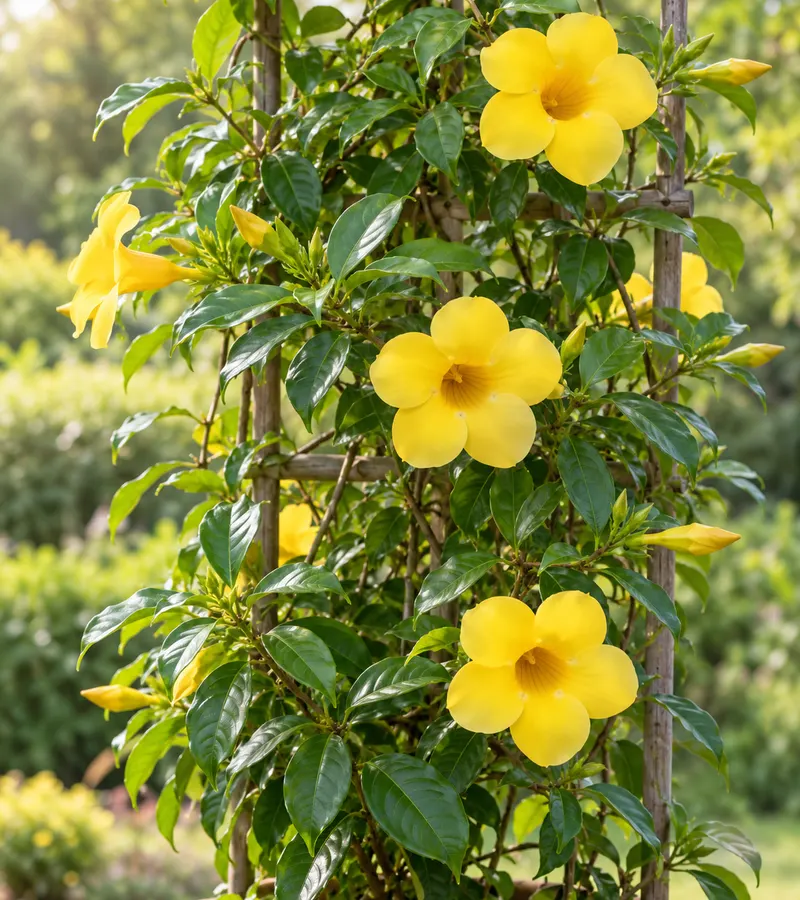
Bright yellow trumpets bloom continuously, climbing a trellis or forming a bush.
Care and placement
Needs full sun (6+ hours), soak-and-slightly-dry watering, phosphorus-rich feeding and hard spring pruning; the white sap is toxic, so wear gloves.
Draft mature dimensions
Maximum height (cm): 400 cm · Maximum spread (cm): 250 cm
Things to consider
All parts are toxic if eaten: the milky sap causes vomiting, diarrhea and abdominal pain (NC State rates the poison severity as low); sap can irritate skin, cause allergic reactions and sensitize to UV. Wear gloves when pruning; keep from children and pets.
How to grow and care for it
Planting and pot
Plant in full sun in loose, well-drained soil; train up a trellis or prune into a shrub. Use a large pot with drainage holes if potted.
Light
Full sun, at least 6 hours of direct sun for heavy flowering; indoors at least 4 hours.
Watering
Soak the soil deeply, then let it dry slightly; water regularly in the growing season and reduce in the cool or dormant period.
Feeding
A phosphorus-rich, water-soluble fertilizer every 2–6 weeks in spring and summer (depending on source); none in winter.
Pruning
Flowers form only on new growth: prune hard in early spring (up to half) for more flower-bearing shoots; deadheading brings more blooms. It is vigorous and hard pruning does not reduce flowering. Wear gloves.
Propagation
Take 8–10 cm stem-tip cuttings in early spring into moist mix; rooting hormone and bottom heat give the best results; seed is the other option. Wear gloves because of the sap.
Pests and common problems
Few serious problems; aphids, mealybugs and spider mites can occur; overwatering causes root rot. Check regularly and treat with insecticidal soap or neem oil.
For more flowers
For plentiful yellow trumpets: full sun, regular phosphorus-rich feeding, a hard early-spring prune, deadheading and soak-then-slightly-dry watering.