
Chinese evergreen
Aglaonema commutatum
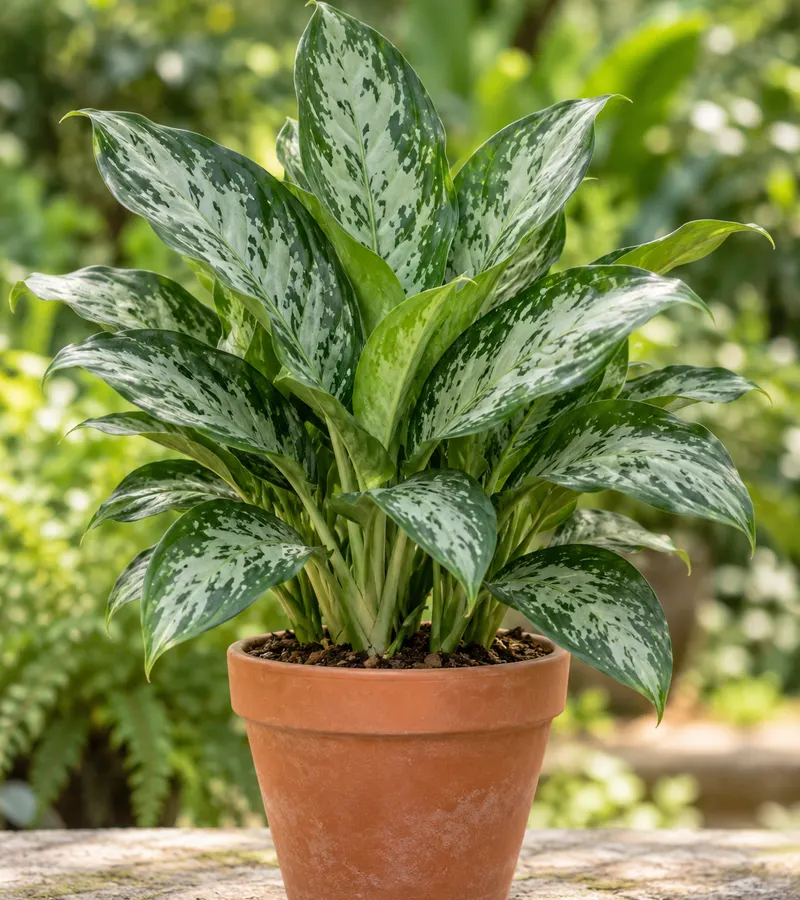
Broad silver-marked leaves keep their shape and are a familiar sight in Vietnamese homes.
Care and placement
Tolerates low to medium indirect light, avoid harsh sun; water when the top 2–3 cm is dry; likes 18–27 °C (65–80 °F) and is chilled below roughly 10–13 °C, so keep away from air-conditioning drafts.
Draft mature dimensions
Maximum height (cm): 70 cm · Maximum spread (cm): 60 cm
Things to consider
Aglaonema (Chinese evergreen) contains insoluble calcium oxalates: toxic to dogs and cats, causing burning mouth, drooling, vomiting (ASPCA, Chinese evergreen entry). Sap may irritate skin. Keep pets and children from chewing leaves.
How to grow and care for it
Planting and pot
Plant in a draining pot with a loose, humus-rich mix. A moderate pot is fine; repot when roots fill it, typically every 2–3 years in warm months.
Light
Solid green forms live in low light; silver-marked forms need low to medium light; pink and red cultivars need at least medium light to keep colour. Avoid direct sun, which scorches.
Watering
Water when the top 2–3 cm is dry, about every 7–10 days when warm and 10–14 days when cool. Overwatering causes rot. Filtered or rain water is better since fluoride in tap water browns tips.
Feeding
Balanced liquid feed at half strength monthly in the warm season; stop from late autumn to late winter. Excess causes crispy edges and salt crust.
Pruning
Only remove old or damaged leaves at the base. Cut off flower stalks if you do not want the plant to spend energy on them.
Propagation
Stem cuttings: take 10–15 cm with at least two nodes, set in tepid water in bright indirect light and change it weekly; roots form in 3–6 weeks, pot when 3–5 cm long. You can also divide clumps or root in moist mix.
Pests and common problems
Mealybugs, scale, aphids and spider mites leave sticky residue; use neem oil. Root rot from overwatering; powdery mildew with high humidity and poor airflow. Cold makes leaves sag with soft water-soaked spots.
For plentiful, healthy leaves
For dense, well-coloured leaves: match light to the cultivar (red/pink need more), keep warm at 18–27 °C, water on schedule and feed lightly in warm months. Mature plants bear spathes and red berries but are grown mainly for foliage.