
Tuberose
Agave amica
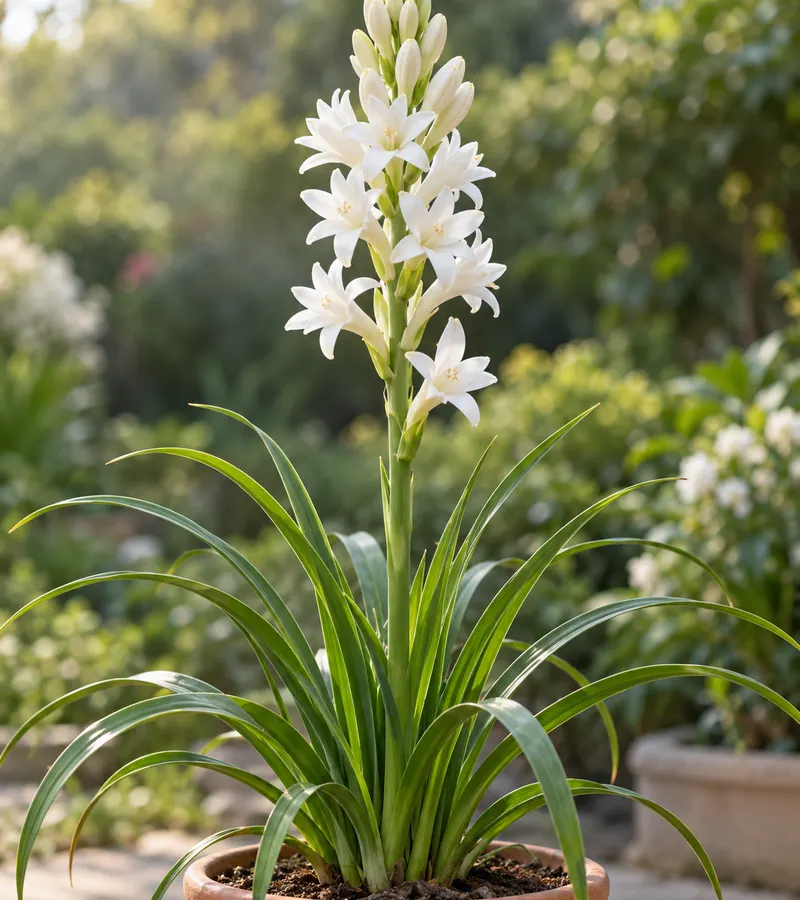
Strongly scented white spikes on tall stalks, familiar on altars and at weddings.
Care and placement
Needs 6–8 hours of sun, moderately fertile, warm well-drained soil; the fleshy tubers rot easily so avoid waterlogging; plant tubers 5–7 cm deep and 15–20 cm apart; strongly scented white flowers for altars and weddings.
Draft mature dimensions
Maximum height (cm): 90 cm · Maximum spread (cm): 40 cm
Things to consider
There is no official toxicity rating for this plant, so it is not claimed safe or toxic. Take care: do not eat it or use it as medicine, wear gloves and wash hands after pruning, and keep children and pets from chewing it.
How to grow and care for it
Planting and pot
Plant tubers in sun once the soil is warm (in cool soil they stay dormant until summer heat), tip up, 5–7 cm deep and 15–20 cm apart, in moderately fertile, well-drained soil. Water lightly once at planting then wait for the first leaf before watering again.
Light
Full sun, at least 6–8 hours for good flowering; part shade reduces blooms.
Watering
Keep soil evenly moist but not soggy in the growing season, letting the surface dry slightly between waterings; reduce when the foliage yellows late in the season. The fleshy tubers rot easily.
Feeding
Balanced slow-release feed every 4–6 weeks avoiding excess nitrogen; or a high-potash feed (such as tomato feed) or 10-10-20 monthly for more flowers; a base feed can be mixed in at planting.
Pruning
Remove spent flower stalks; cut flowers early morning at the base without leaves and change vase water every 1–2 days; trim yellowed leaves late in the season.
Propagation
Separate offset tubers when lifting at season end; in cold regions lift tubers before frost and store them in sand. A hot-water soak before planting reduces nematodes.
Pests and common problems
Aphids, scale, mealybugs, thrips, red spider mites and slugs; grey mould and rot if overwatered; viruses spread by aphids; nematodes stunt growth. Use a strong water spray or neem oil for aphids and mealybugs.
For more flowers
For plenty of flower spikes: full sun, healthy tubers, warm soil, potassium-rich feeding and even watering without waterlogging. Stiff, upright, richly scented spikes.